


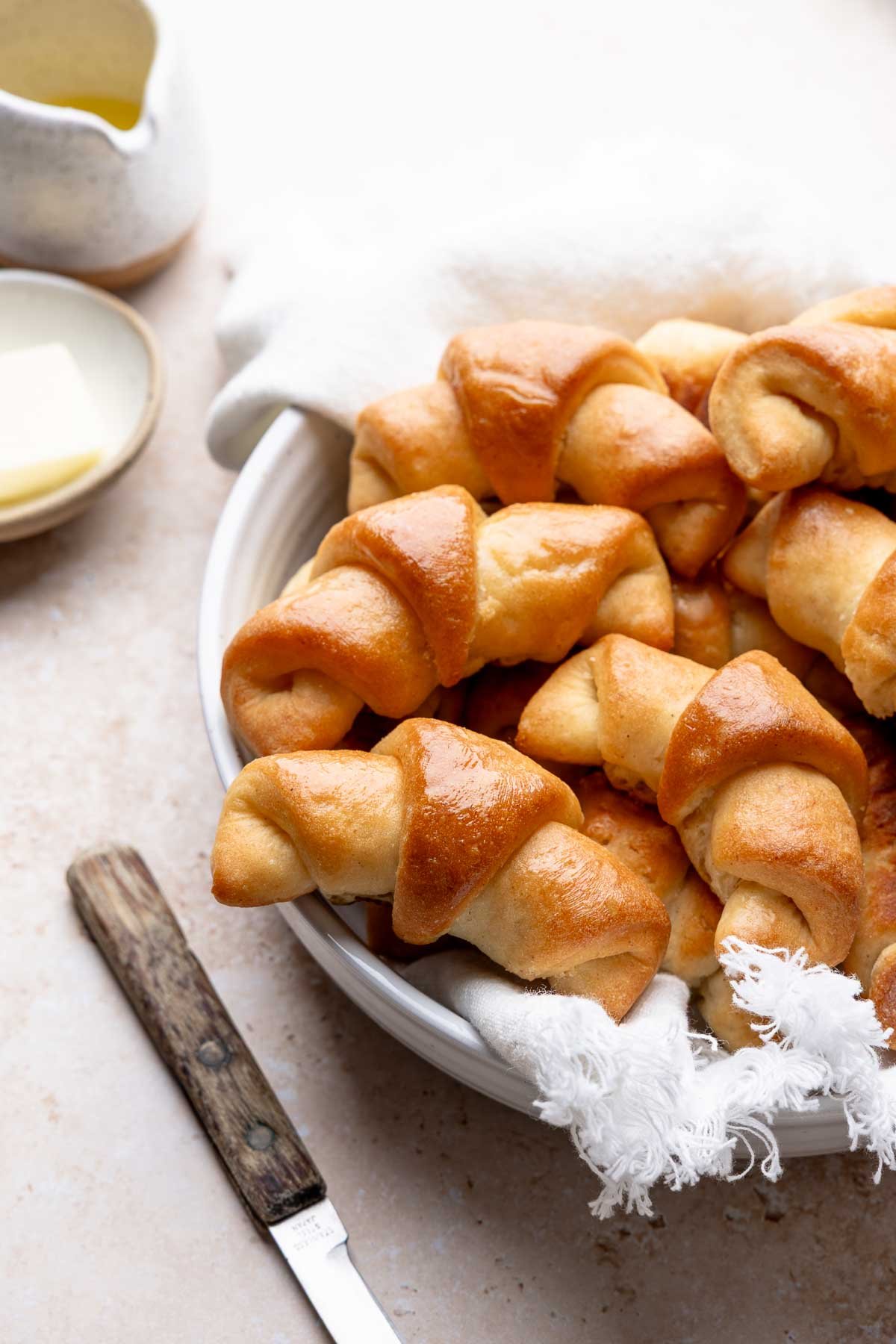
These gluten-free crescent rolls bake up soft and buttery, with a tender golden crust-just like the classic Pillsbury rolls you remember. They're a must-have for Thanksgiving and Christmas, or served alongside this slow cooker chicken and rice. They make any meal feel extra special. After all, there's nothing quite like pulling a tray of warm crescent rolls out of the oven!

Katie's Recipe Notes
When I set out to make a classic crescent roll, I started with my soft gluten-free dinner rolls recipe, thinking it would be a good start. And it was, but they weren't quite there yet. The rolls needed to be a bit fluffier, and the flavor of the rolls with just Fioreglut was a bit stronger than I wanted for this recipe.
To balance out the flavor, I added a bit of sorghum and potato flour. From past gluten-free yeast bread recipes, I knew these flours would soften the texture and mellow the flavor. Then, instead of adding more psyllium, I tried adding tapioca starch to help give the dough a little extra stretch and that soft fluffy rise.
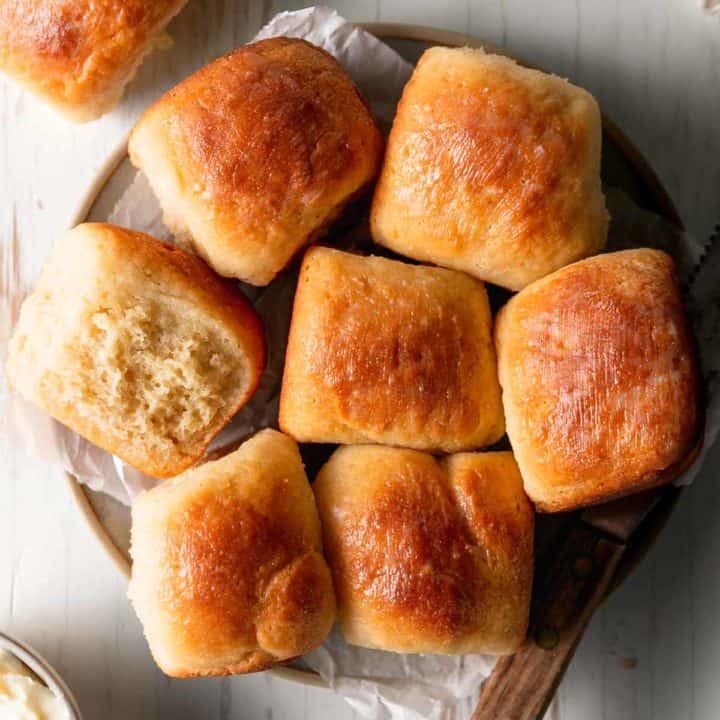
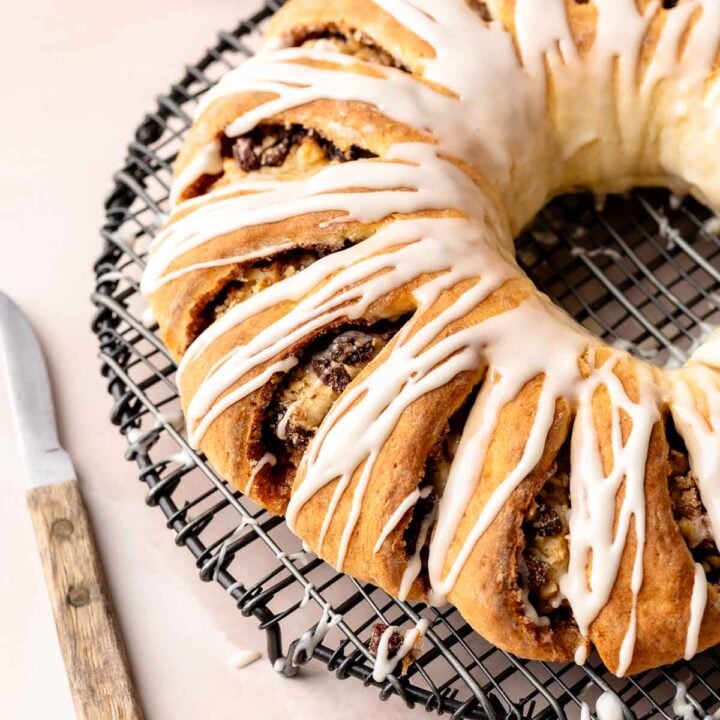
That final test was a success. The dough was easy to make and work with and the rolls baked up soft and fluffy, just as you'd expect from a crescent roll recipe. I've even started coming up with more ways to use the dough, like my gluten-free pull-apart bread and gluten-free Swedish tea ring.
Recipe Ingredient Notes
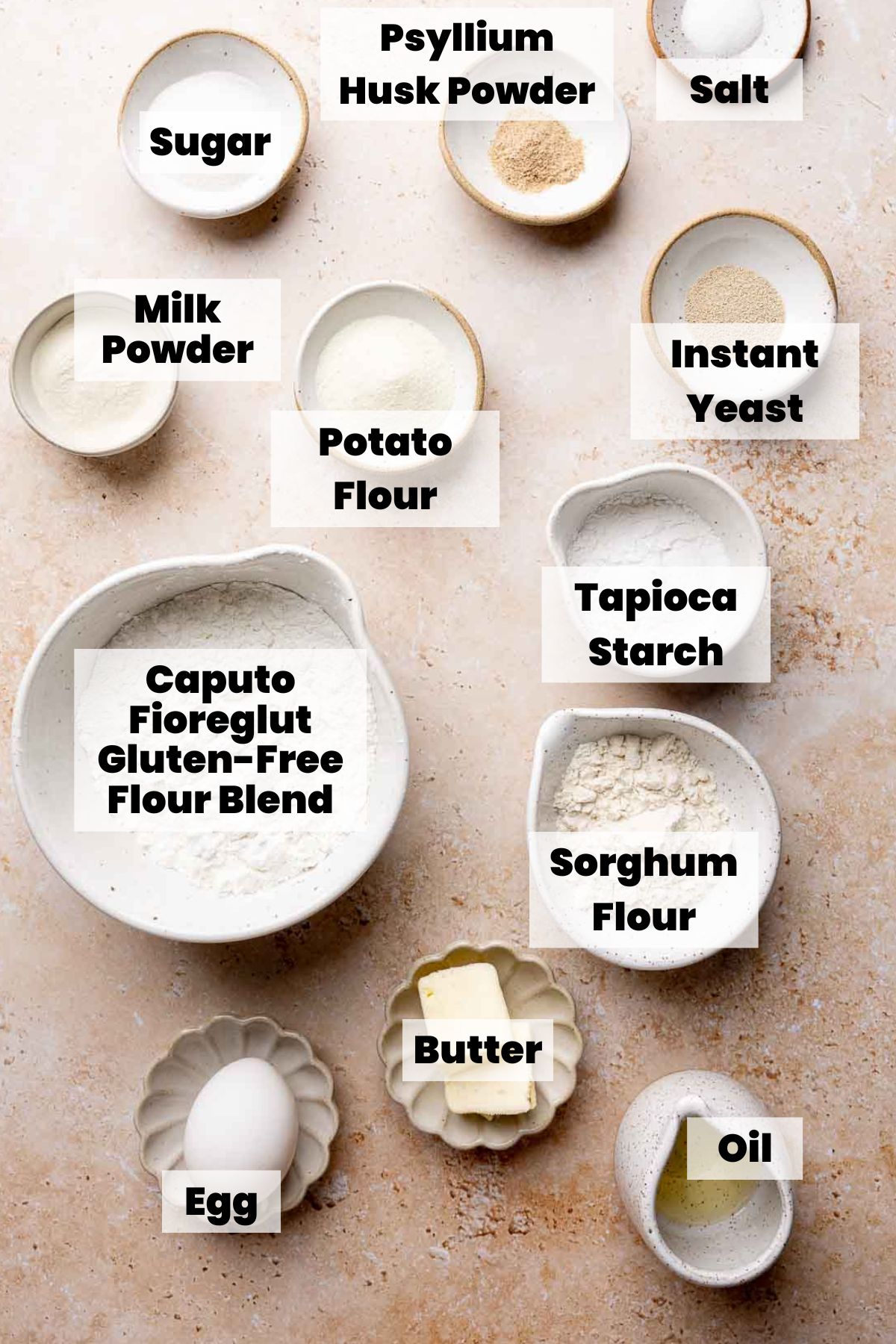
- Caputo Fioreglut: This is the only gluten-free flour blend I recommend for this recipe. You can order it from Amazon or Brick Oven Baker. If you are new to Brick Oven Baker, you can use save 10% off your first order with code, Katie.
- Please note: Fioreglut contains gluten-free wheat starch.
- Sorghum flour: Adds a mild, nutty flavor to the rolls that balances Fioreglut. Use superfine sorghum flour if possible.
- Potato Flour: This is not the same as potato starch. Potato flour brings tenderness and moisture to the crescent roll dough.
- Tapioca Starch: Lends extra stretch and elasticity to the dough helping with the fluffy soft texture.
- Milk Powder: This enhances the doughs richness and flavor, and helps the crust stay soft. I used non-fat dry milk powder.
- Psyllium Husk Powder: There is already psyllium in Fioreglut, but we add more for structure and binding of this particular recipe. If you only have whole husk, use this psyllium husk conversion calculator.
- Instant Yeast: This is not the same as active dry yeast, be sure you have Instant yeast, bread machine, or rapid rise yeast. Also, make sure it's fresh-refrigerated after opening, open for less than 6 months, and not expired.
- Oil: Any neutral oil will work. I used avocado oil, but canola oil or olive oil will also work.
- Dairy-Free: While I do think it would work, I haven't tested dairy-free substitutes at this time. If you make this recipe dairy-free, please leave a comment below.
*Refer to the recipe card below for exact measurements.
How to Make Gluten Free Crescent Rolls
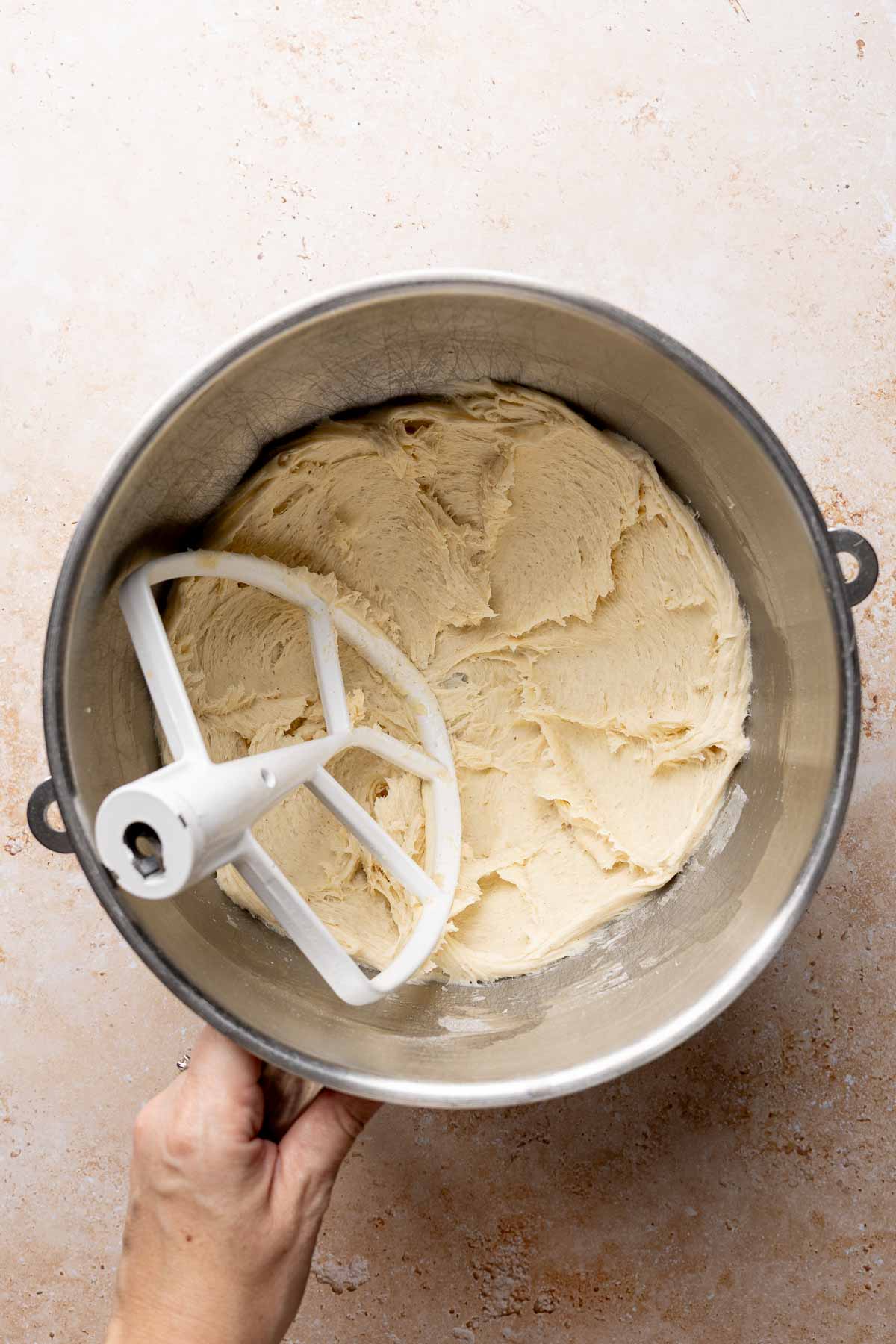
- Step 1: Mix the crescent dough until smooth. The dough will be thick and soft.

- Step 2: Roll the dough into an 11 inch circle, about ¼-inch thick. Cut into 8 wedges.
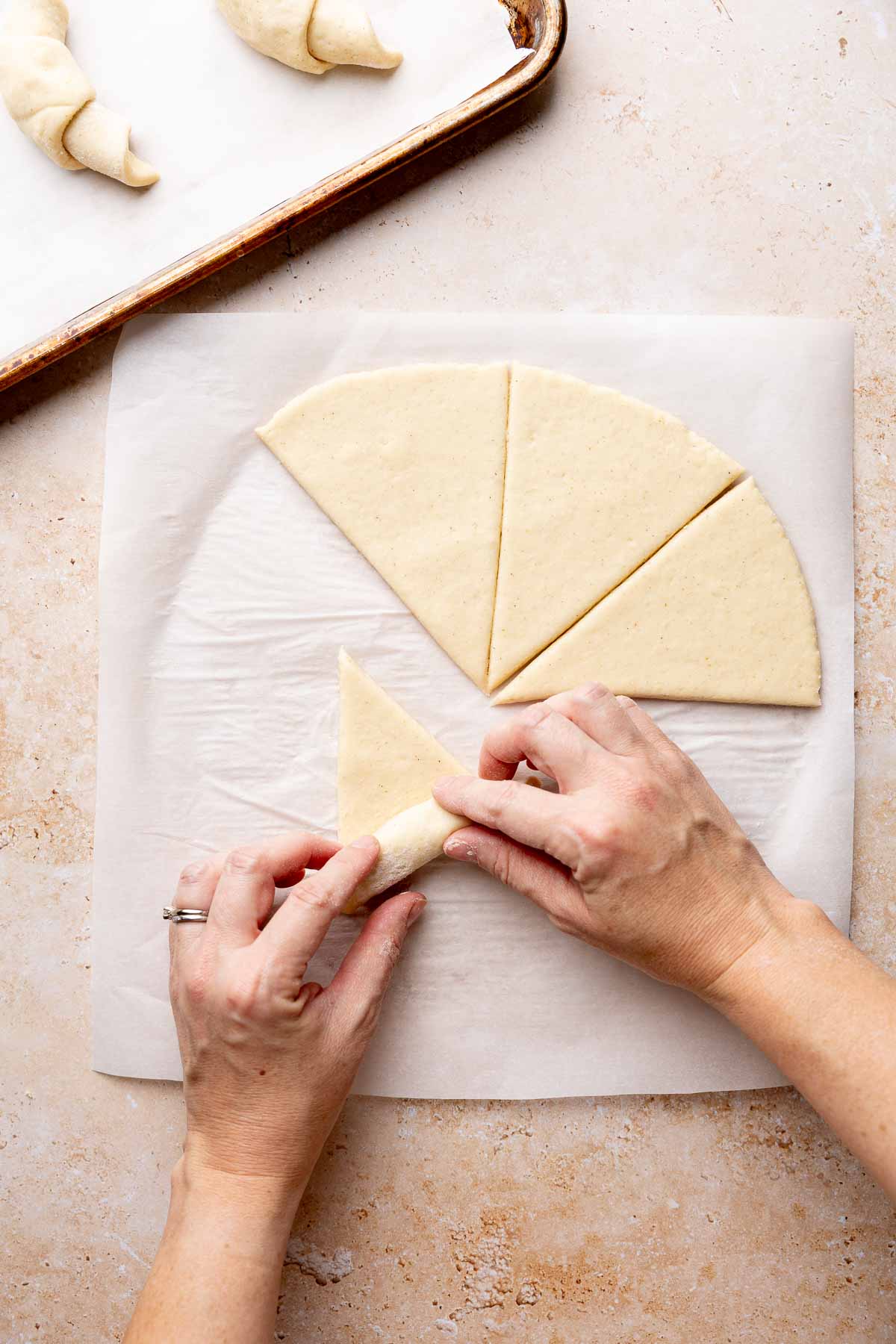
- Step 3: Starting at the wide end, roll each wedge toward the tip.
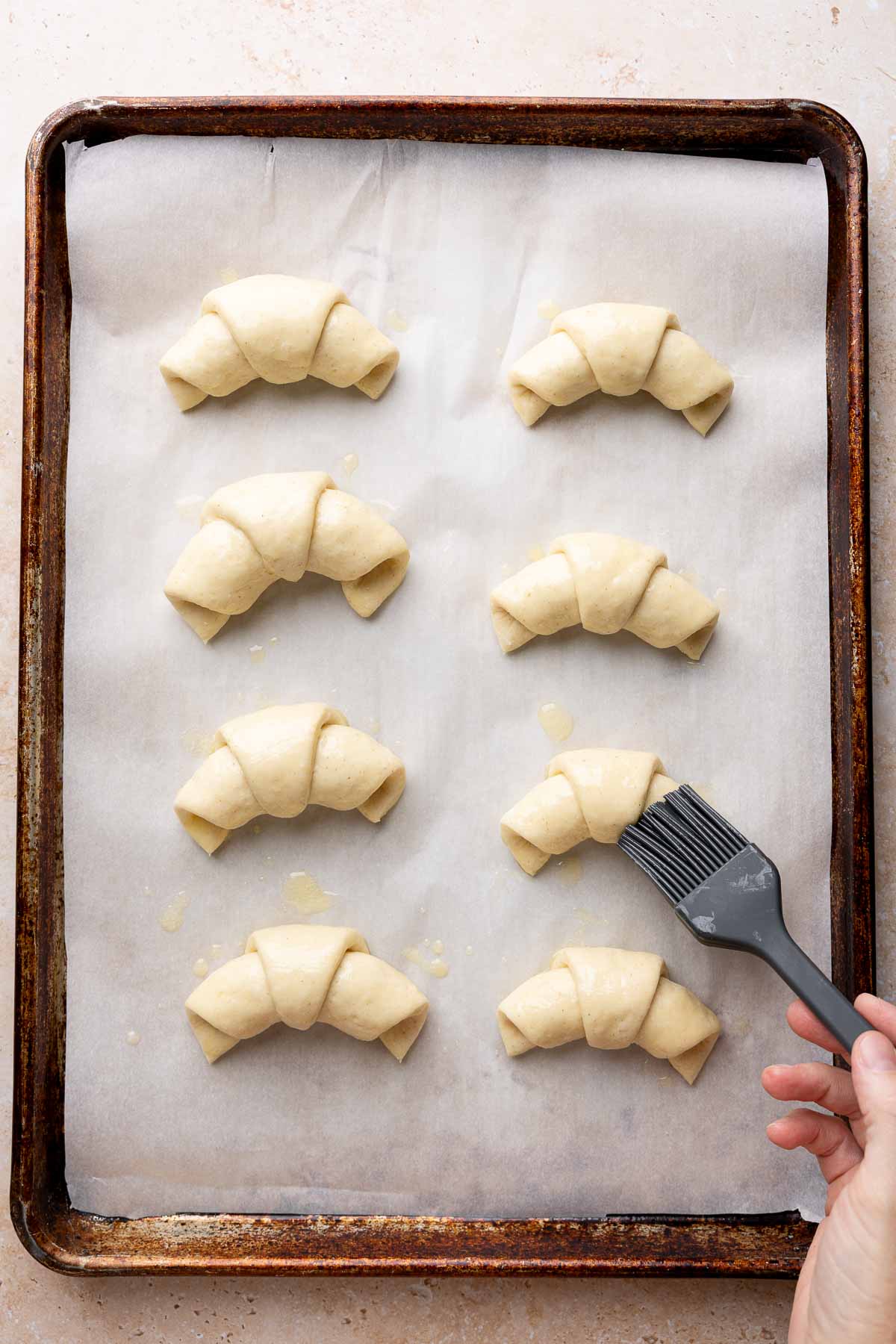
- Step 4: Place tip-side down on a parchment-lined baking sheet. Brush with butter before baking according to recipe instructions below.
How to Get the Perfect Crescent Shape

To keep your crescents from unraveling, tuck the pointed tip underneath the roll and place it tip-side down on the pan. Then, gently turn the ends so they rest flat against the pan, as shown above. This prevents the point from popping up as the rolls bake and helps them keep their classic crescent shape.
Save This Recipe!
Recipe Tips
- Proof just until puffy: Don't over-rise the dough. Only proofing for 40 minutes is key to the oven spring, perfect shape, and fluffy texture. They will not double in size.
- Butter after baking: The rolls may look a little dry when they first come out of the oven, that's normal. Brush them with melted butter while they're still hot and cover with a tea towel while they cool to soften the crust.
- Don't use the dough hook: Since the dough is more batter-like while mixing, the paddle attachment is better suited for the job.
- Substitutions not guaranteed: Changing any of the listed ingredients may lead to unexpected results. Since I haven't tested all possible substitutions, I can't guarantee the outcome if you substitute or omit ingredients.
- Measure by weight: I highly recommend measuring the ingredients by weight for this recipe. For quantities less than 10g, be sure to use at scale that is accurate for small amounts or use the teaspoon measurements for those ingredients.
Storage
These rolls are best enjoyed fresh from the oven for the softest texture.
If you have leftovers, store them covered at room temperature for up to two days. They will lose some softness, but you can rewarm them in the microwave for 15-30 seconds to soften them up again.
Make Ahead & Freezing
While I still recommend making them fresh if you can, you can prepare them ahead of time. This is great, especially when preparing for a big meal like Thanksgiving dinner.
Par-bake and freeze: Bake the shaped rolls at 375°F until they are set but still pale, about 10-12 minutes. Let them cool completely, then wrap tightly and freeze for up to 1 month.
To finish baking: Place frozen rolls on a baking sheet and bake at 375°F for 8-10 minutes, or until gold and warmed through.
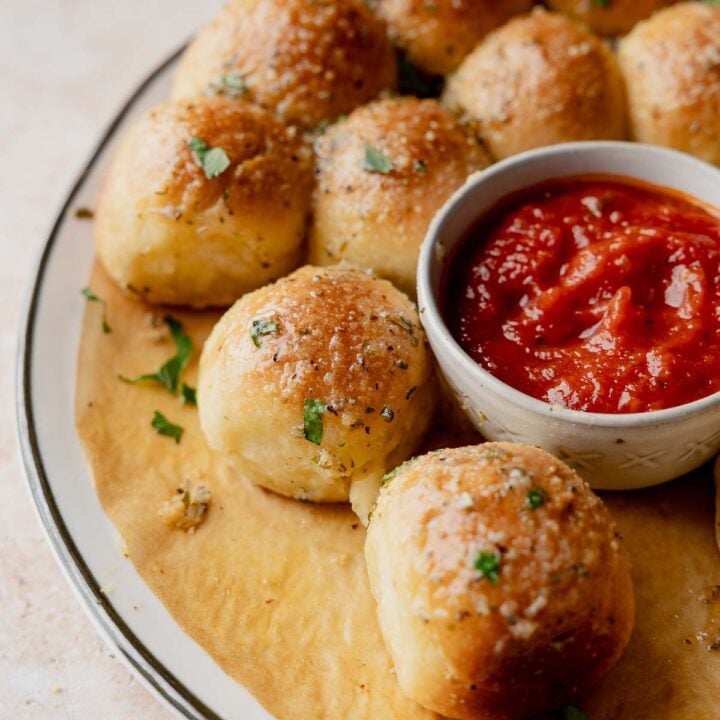
More Gluten-Free Yeast Bread Recipes



Also, be sure to check out my gluten-free sides for Thanksgiving dinner.
Still Hungry? Subscribe Here!
Recipe

Gluten-Free Crescent Rolls
Video
Equipment
- Stand Mixer with paddle attachment
Ingredients
- 125 g Caputo Fioreglut gluten-free flour
- 30 g superfine sorghum flour
- 20 g potato flour
- 20 g tapioca starch
- 13 g dry milk powder
- 14 g granulated sugar
- 3.5 g instant yeast (1 teaspoon)
- 3 g psyllium husk powder (¾ teaspoon)
- 3 g table salt (½ teaspoon)
- 100 g water
- 28 g butter (plus 2 Tablespoons more for brushing )
- 8 g neutral oil (2 teaspoons)
- 1 large egg (room temperature)
Instructions
- In the bowl of a stand mixer, whisk together the 125 g Caputo Fioreglut gluten-free flour, 30 g superfine sorghum flour, 20 g potato flour, 20 g tapioca starch, 13 g dry milk powder, 14 g granulated sugar, 3.5 g instant yeast, 3 g psyllium husk powder, and 3 g table salt.
- In a microwave-safe dish, warm the 100 g water, 28 g butter, and 8 g neutral oil to 120-130°F. Whisk in the 1 large egg. Recheck the temperature to ensure it is still between 120-130°F, rewarming if needed.
- Add the warmed wet ingredients to the dry ingredients. Mix with the paddle attachment on medium speed until smooth and thick, about 2-3 minutes, scraping the bowl at least once to ensure everything is evenly incorporated.
- Roll the dough into an 11-inch circle, about ¼-inch thick, on lightly floured parchment paper. Use a pizza cutter or pastry wheel to cut the circle into 8 equal wedges.
- Starting at the wide end, roll each wedge toward the tip, then tuck the point underneath. Place the roll point-side down on a parchment-lined baking sheet, gently turn the ends so they rest flat on the pan.
- Cover with plastic wrap and let rise in a warm place for 40 minutes, or until just puffy. **Do not over-proof, they will not double in size.**Meanwhile, preheat the oven to 375°F (190°C).
- Uncover and brush the rolls with melted butter. Bake for 14-16 minutes, until light golden brown and centers are 200-205°F.
- Brush with melted butter while hot and cover with a tea towel to soften the crust. Serve warm.
Notes
- Par-bake: Bake the rolls at 375°F for 12 minutes until set but pale. Cool completely, then wrap well and freeze up to 1 month.
- To finish: Bake from frozen at 375°F for 8-10 minutes, or until golden and heated through.
Nutrition
* Nutritional information is provided as a courtesy and should be used as an estimate only. See the nutrition policy for more information.
Allison says
Do you have thoughts on omitting or substituting the dry milk powder?
Katie Olesen says
Why do you want to omit or substitute? Is this because you can't tolerate dairy or because you don't have milk powder? I haven't tested substitutions for milk powder with this recipe yet, and I don't want to suggest something I haven't tried myself.
Dani says
Could I brush them with egg wash instead of butter before baking?
Katie Olesen says
Hi Dani, I tried this, and I don't recommend. The results were definitely not as nice as with the butter.