


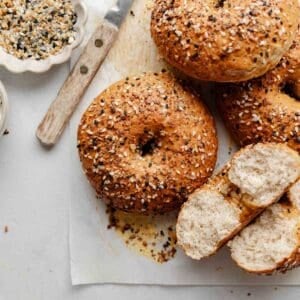
These gluten-free bagels have the perfect balance of texture and flavor, thanks to a blend of Caputo Fioreglut, brown rice flour, and sorghum. The dough is easy to work with and bakes into bagels with a crisp, golden crust and chewy interior! This recipe is also dairy-free!
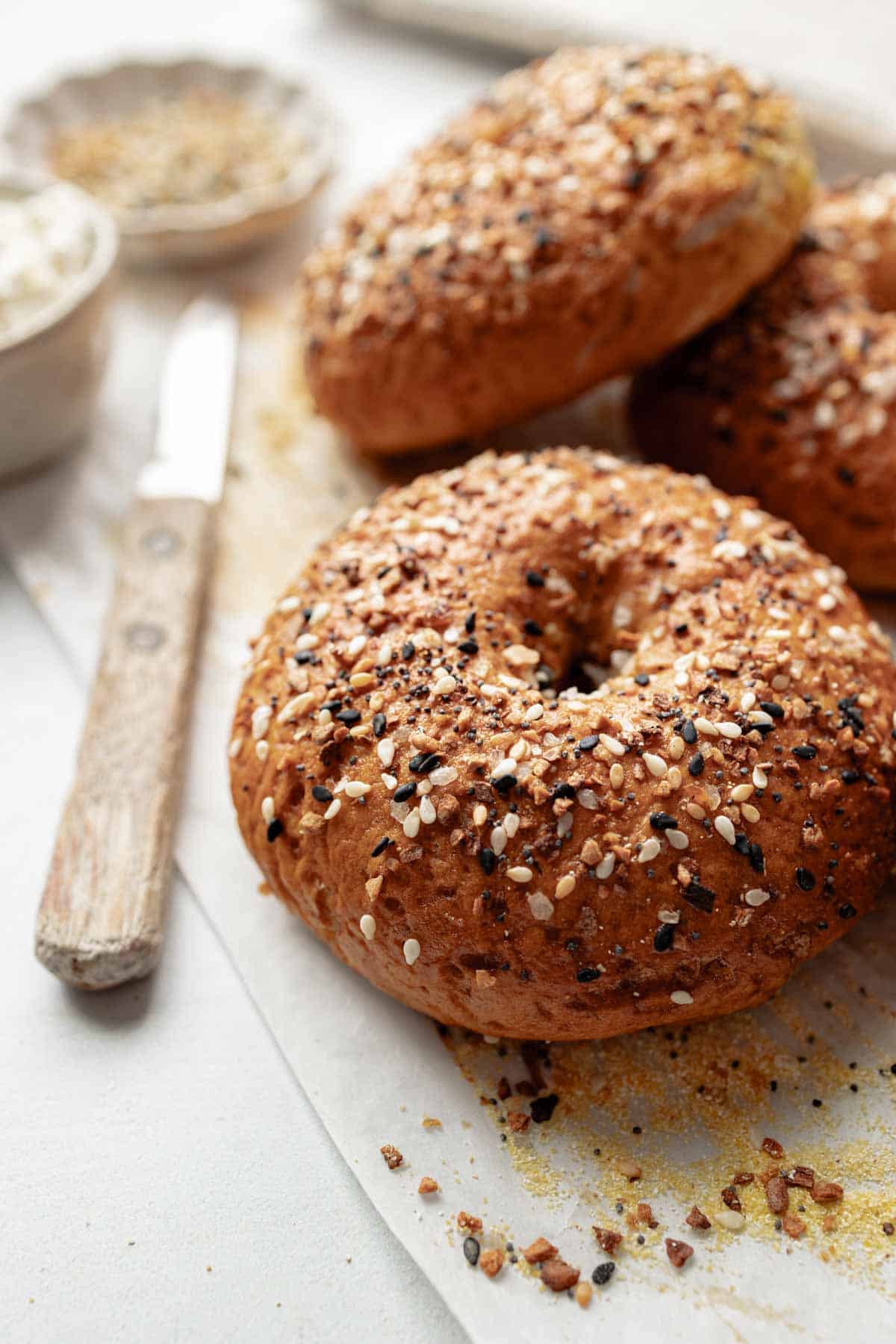
Katie's Recipe Testing Notes
I've worked with Caputo Fioreglut in a lot of recipes, and while it's amazing for pizza dough, I'm finding that some gluten-free yeast breads, like these bagels, need a little something extra. I started experimenting with adding whole grain flours to the mix, and it has made all the difference!
Not only do you get the soft, pliable dough and great rise that Fioreglut provides, but adding brown rice flour and sorghum lends a more balanced flavor and hearty texture for a truly satisfying bagel.
And let's talk about this bagel dough-it's honestly a dream to work with. It feels like regular yeasted dough, soft and pliable, without being overly sticky. And the best part? These bagels taste amazing even the next day, no toasting required!
Ingredients for the Best Gluten-Free Bagels
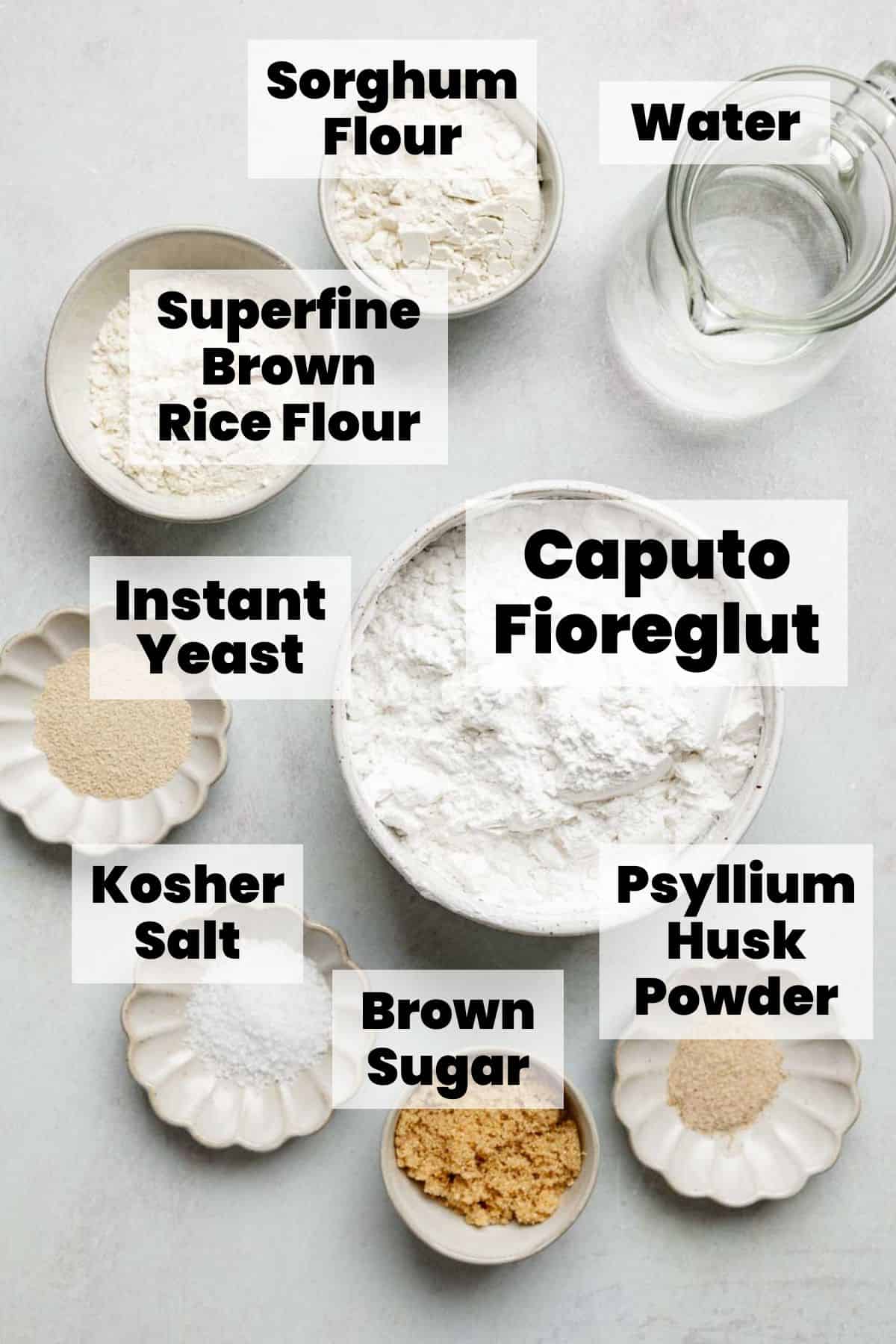

Get the Goods!
Caputo Fioreglut
I recommend you buy Caputo Fioreglut from Brick Oven Baker. They have great prices and you can use code: KATIE for 10% off your first order!
- Caputo Fioreglut: My favorite gluten-free flour blend for yeast breads. Note that it contains gluten-free wheat starch, so while it is safe for those with celiac disease, it is not suitable for those with a wheat allergy.
- Superfine Brown Rice Flour: Adds structure and a mild nuttiness to the dough. Superfine flour helps keep the bagels smooth and light without a gummy texture.
- Superfine Sorghum Flour: Another whole grain flour that enhances flavor and adds a bit of density, helping balance the softness of Fioreglut.
- Instant Yeast: Also known as bread machine or rapid rise yeast, instant yeast doesn't need to be proofed separately-just mix it directly into the dry ingredients.
- Psyllium Husk Powder: This helps with elasticity and structure, mimicking the binding properties of gluten. After testing both whole husk and the powder, I prefer psyllium husk powder because it blends more smoothly into the dough and is easier to work with. If you only have whole husk, you can still use it-try my psyllium husk conversion calculator!
*Refer to the recipe card for full ingredient information.
Substitutions
Unfortunately, I don't have any recommended substitutions for this recipe. The flours used each play a crucial role in the dough's texture, structure, and flavor. Fioreglut provides the elasticity needed for a chewy bagel, while the brown rice and sorghum flours add depth and balance. Swapping any of these may drastically change the results, so I recommend sticking to the recipe for the best outcome.
Toppings for Bagels
The base of this bagel is plain. Feel free to add a variety of toppings of your choosing. I went with my homemade everything bagel seasoning.
Try sesame seeds or poppy seeds for a simple, nutty crunch, or go for a salted bagel with a sprinkle of coarse kosher or flaky sea salt. Love a cheesy bagel? Top with cheddar, parmesan, or asiago before baking. For a more savory bite, add dried minced onion or garlic flakes.
If you're craving something sweet, brush with butter and sprinkle with cinnamon sugar, or try a maple pecan variation with maple syrup and chopped pecans. For a heartier twist, a light brush of honey with a sprinkle of gluten-free oats adds a slightly sweet, wholesome flavor.
Kitchen Tools You Need!
- Digital Kitchen Scale: I highly recommend weighing the ingredients (especially the flours) to ensure accuracy. This helps your bagels turn out just like mine!
- Stand Mixer: The best tool for mixing this dough. It's a thick dough, and mixing on medium speed for about 2 minutes helps develop the right structure.
- Mixing by Hand: If you don't have a stand mixer, you could knead the dough by hand, but it will take more effort. Check the process photos to see the proper dough consistency before shaping.
How to Make This Gluten-Free Bagel Recipe
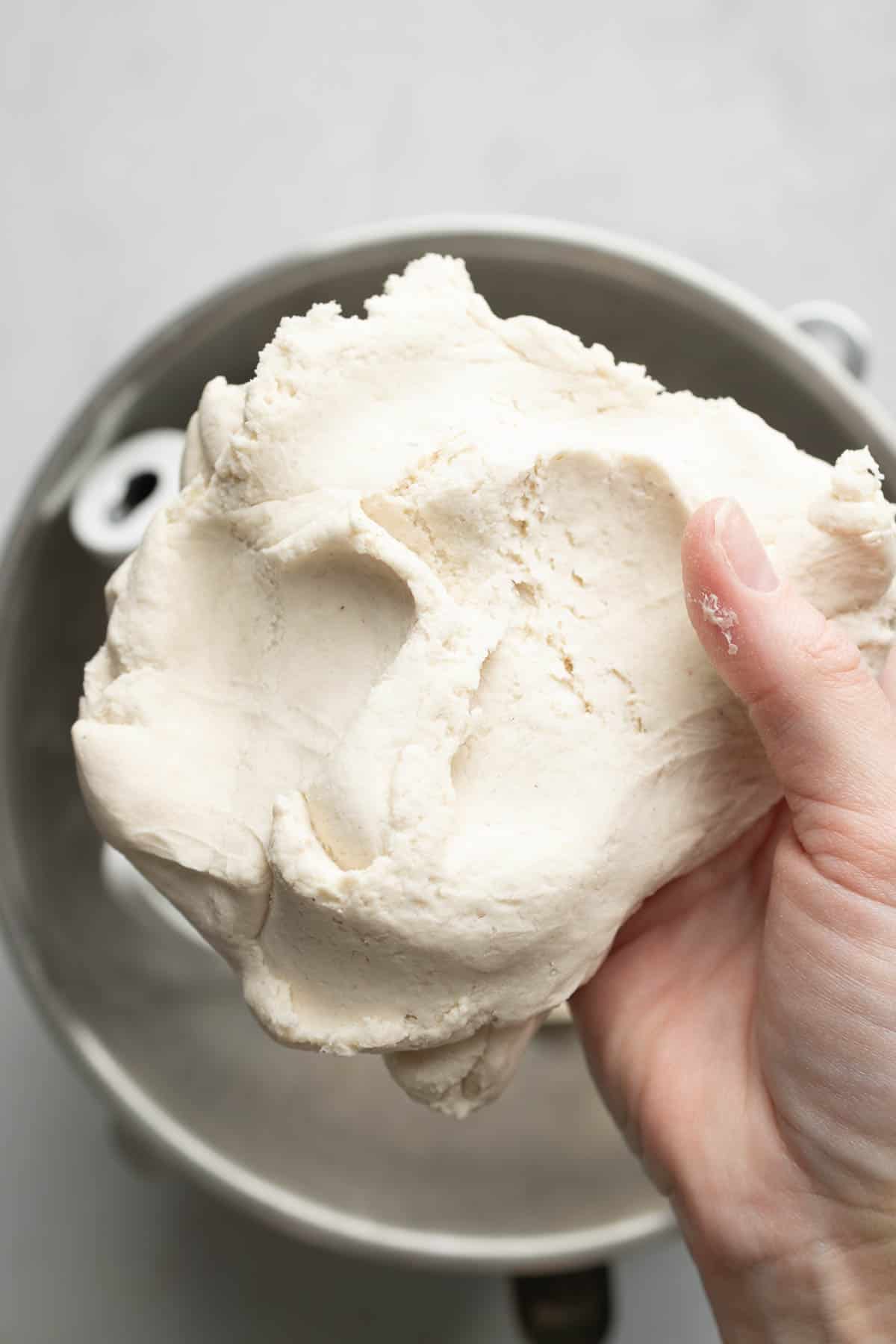
- Step 1: In the bowl of a stand mixer, combine the gluten-free flours, psyllium husk, instant yeast, salt, and brown sugar. Add warm water and mix with the paddle attachment until a smooth dough forms. The dough should be soft but hold together well.
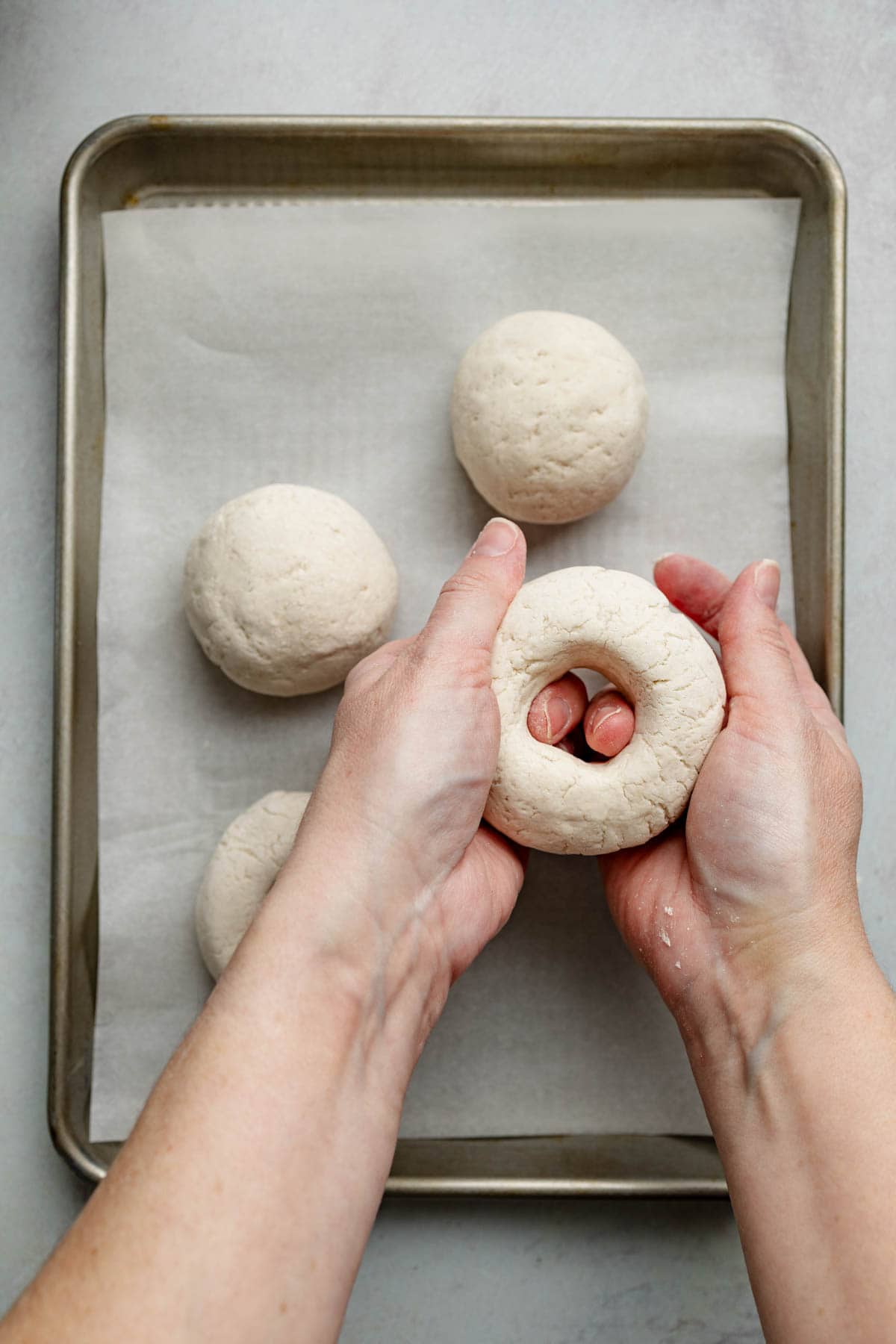
- Step 2: Divide the dough into four equal portions and roll each into a smooth ball. Use your fingers to press a hole through the center of each ball, gently stretching it to form a classic bagel shape. Place the shaped bagels on a parchment paper-lined baking sheet.
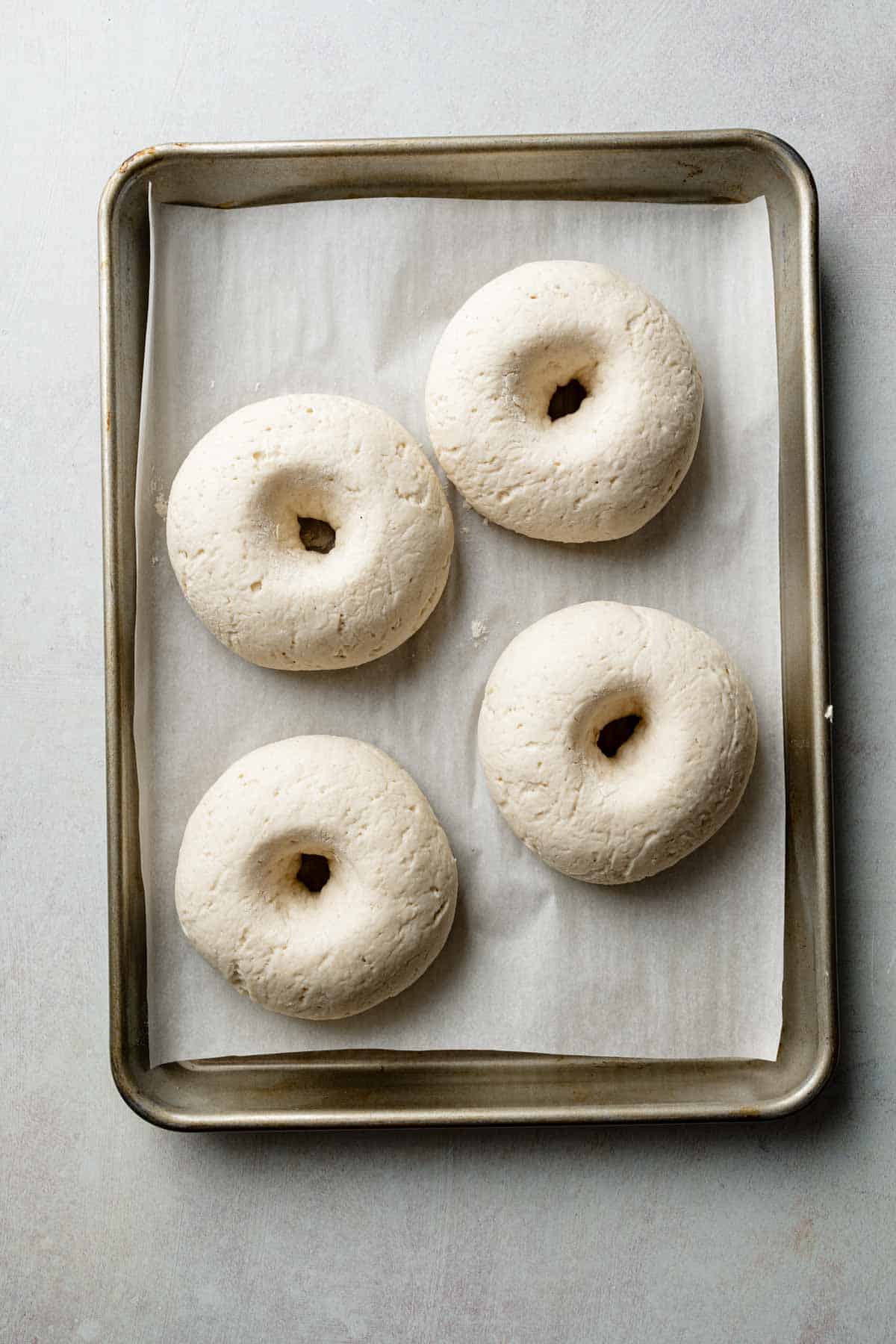
- Step 3: Let the shaped bagels rest in a warm place until they have puffed up and almost doubled in size.
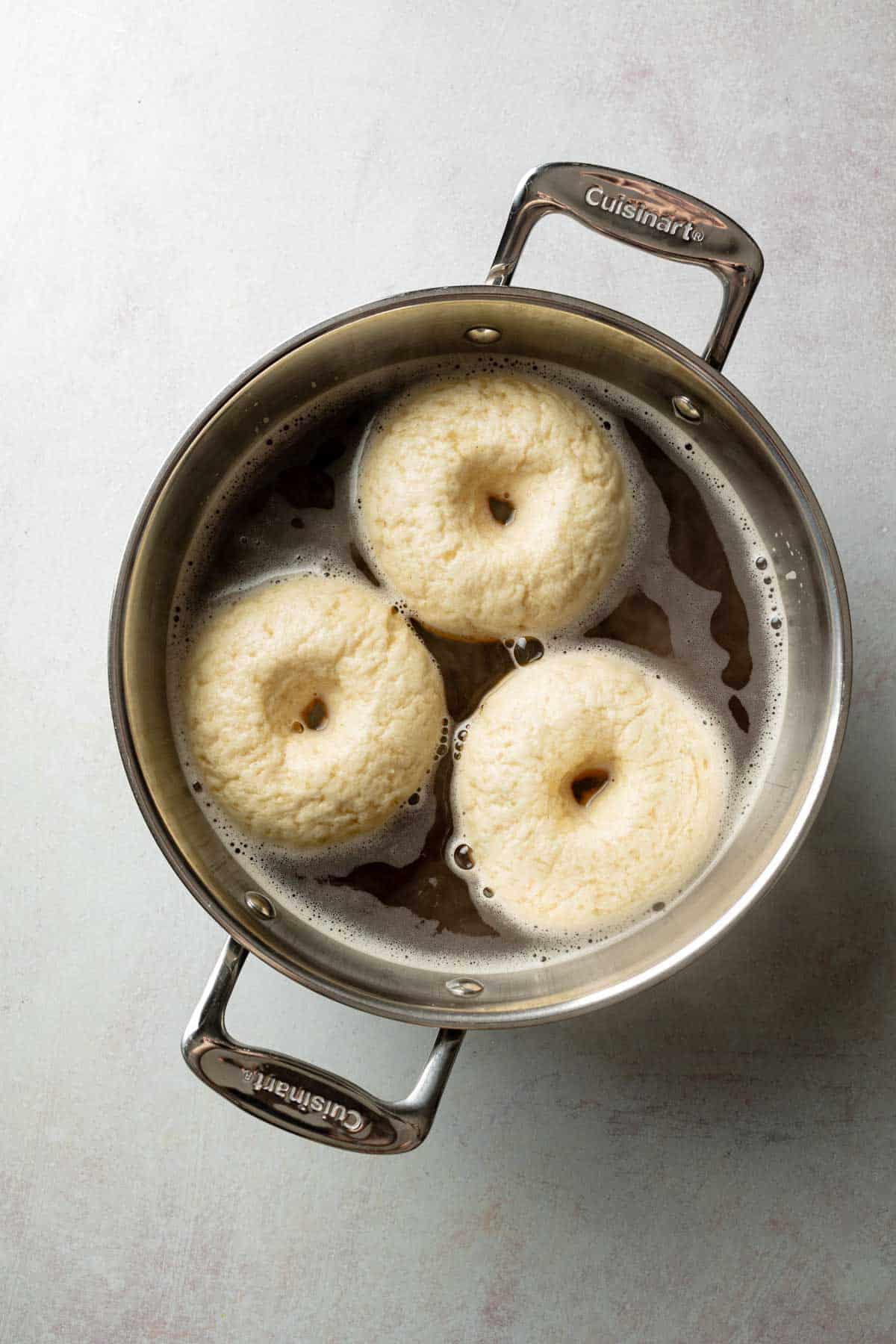
- Step 4: Bring a large pot of water, with molasses and baking soda, to a boil. Gently drop the bagels into the boiling water for about 15 seconds per side. Remove with a slotted spoon and place them back on the baking sheet.
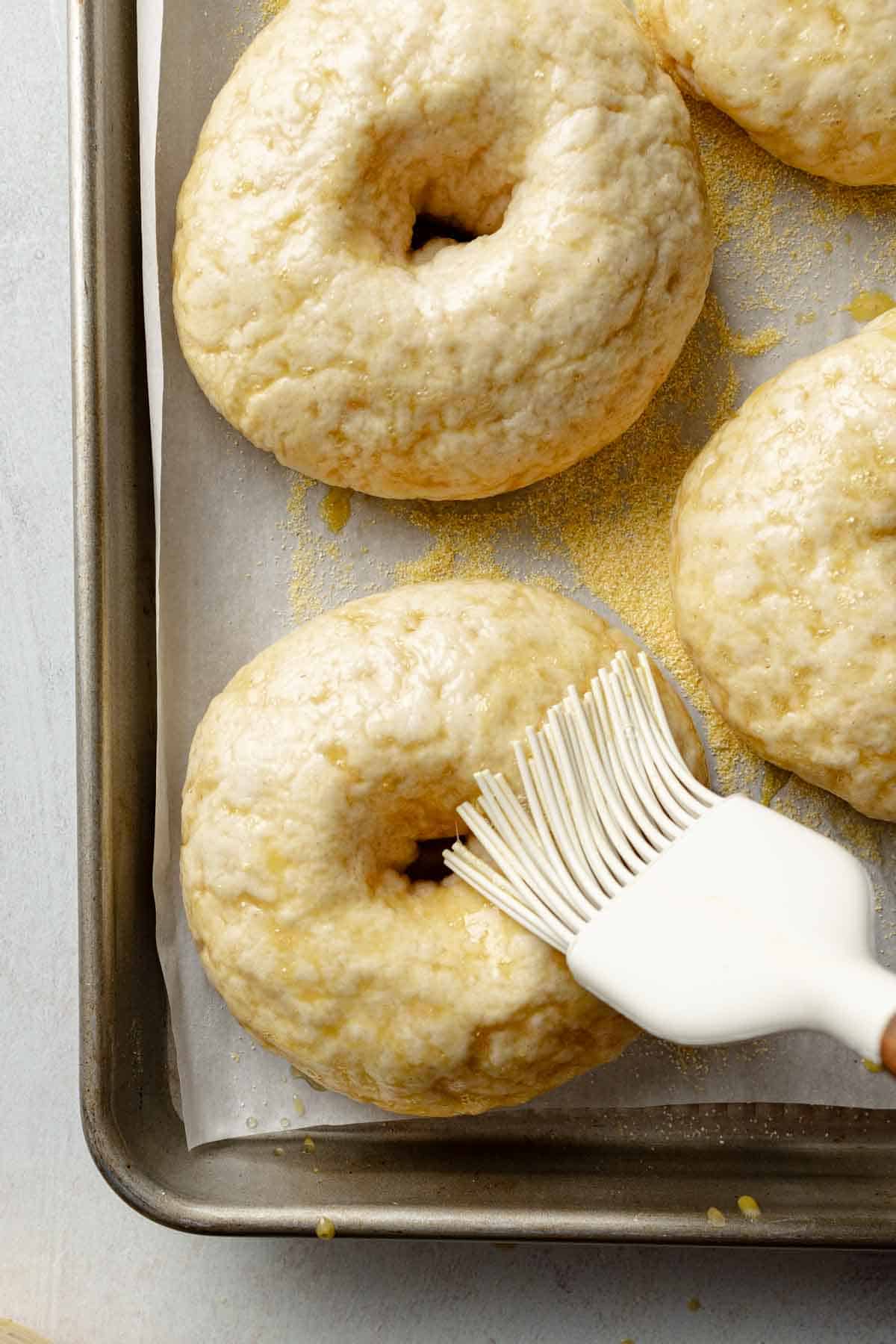
- Step 5: Brush the boiled bagels with an egg wash to help them brown in the oven.
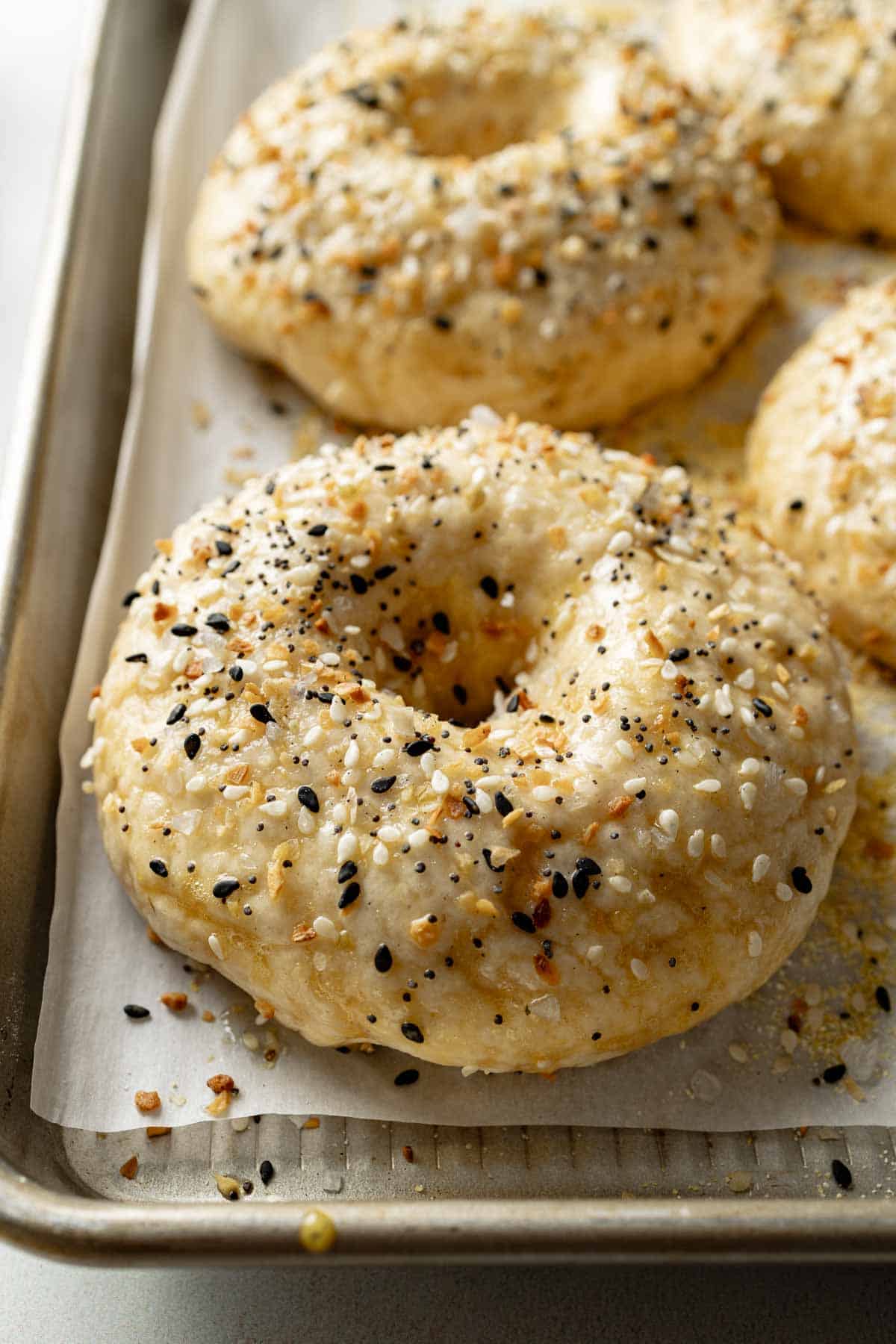
- Step 6: If using toppings like everything bagel seasoning, sprinkle them on now while the surface is still wet.
- Step 7: Bake the bagels in a preheated oven until they are golden brown and crisp on the outside.
Storage
Room Temperature: Store cooled bagels in an airtight container or resealable bag for up to 2 days.
Freezing: Slice bagels in half and store them in a freezer-safe bag for up to 3 months. Toast straight from frozen or let them thaw at room temperature.
Save This Recipe!
Top Recipe Tips!
- Weigh the ingredients! Using a digital kitchen scale ensures accuracy and helps your bagels turn out just right.
- Easy hole shaping trick! Use the end of a wooden spoon or whisk dusted with flour to poke the holes in your bagels, then gently stretch them to size.
- Make the center hole larger than you'd think! Aim for about 1 ½ inches in diameter-the dough expands as it rises, and a smaller hole may close up.
Recipe FAQs
Yes! While Fioreglut does contain psyllium husk, I find that adding a bit more improves the structure of certain yeast breads, like bagels, helping them hold their shape and develop the right texture.
You can use active dry yeast instead! Just dissolve it in warm water (about 110°F) and let it sit for 5-10 minutes until foamy before adding it to the dough.
I have not tested King Arthur Gluten-Free Bread Flour in this recipe. If you want to give it a try, refer to the process photos above to gauge the proper dough hydration and texture. Since the composition of the flours is different, you may need to make adjustments to achieve the right consistency. Let me know how it goes if you experiment with it!
Regular brown rice flour and sorghum flour will work, but superfine flours create a better texture. If using coarser flours, the bagels may turn out slightly more gummy or gritty. If possible, blend the coarser in a food processor to create a finer texture before using.
More Gluten-Free Bread Recipes with Fioreglut
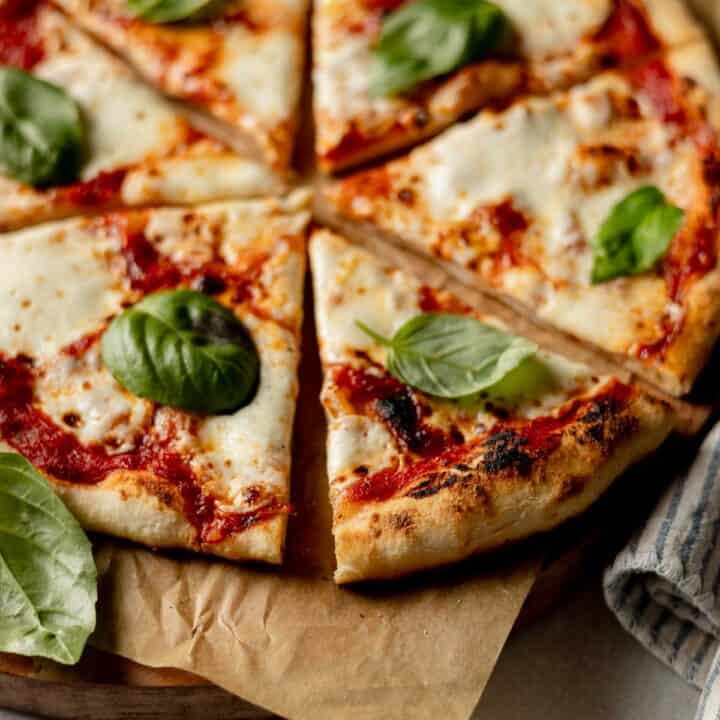
If you love using Fioreglut, try more of my recipes like this gluten-free deep dish pizza and the ones listed below!
Still Hungry? Subscribe Here!
Recipe
Gluten-Free Bagels (Caputo Fioreglut)
Ingredients
- 230 g Caputo Fioreglut Gluten-Free Flour
- 40 g superfine brown rice flour
- 40 g superfine sorghum flour
- 21 g brown sugar
- 8 g kosher salt
- 6 g instant yeast (RapidRise or bread machine)
- 2 g psyllium husk powder
- 210 g water (warmed to 120-130°F.)
For Boiling and Baking
- 2 Tablespoons cornmeal (for dusting baking pan)
- 6 cups water (for boiling bagels)
- 1 Tablespoon molasses (for boiling bagels)
- 1 Tablespoon baking soda (for boiling bagels)
- 1 large egg (for egg wash)
- 2 teaspoons everything bagel seasoning (or your desired toppings)
Instructions
Mix the Dough and Form the Bagels:
- In the bowl of a stand mixer, whisk together the Caputo Fioreglut, brown rice flour, sorghum flour, brown sugar, kosher salt, instant yeast and psyllium husk powder. Add the warm water and mix on medium speed for about 2 minutes, or until the dough is smooth and fully combined, scraping the sides of the bowl as needed. The dough should be soft and pliable, not overly sticky.
- Divide the dough into four equal pieces and roll each into a smooth ball. Use your finger, or the end of a wooden spoon dipped in flour, to poke a hole in the center, then gently stretch the hole to about 1 ½ inches in diameter. Place the shaped bagels on a parchment-lined baking sheet.
- Cover the bagels loosely with plastic wrap or a tea towel and let them rise in a warm place until puffy, about 45 minutes to 1 hour. They should expand but may not double in size.
Prepare for Baking:
- Preheat the oven to 425°F. Line a separate baking tray with parchment paper and dust it with cornmeal.
- Bring a large pot of water to a boil, then stir in the molasses and baking soda. Carefully lower the bagels into the water, boiling for 15-30 seconds per side. Use a slotted spoon to transfer them to the baking sheet.
- In a small cup, whisk the egg until slightly foamy, then brush the tops of the boiled bagels with the egg wash. Sprinkle with everything bagel seasoning or your preferred topping.
- Bake for 18-20 minutes, or until golden brown with an internal temperature of 205°F. Let cool slightly before slicing and enjoying with a smear of cream cheese!
Notes
- I highly recommend you weigh the ingredients, especially the flours, for the most accurate results. Click the Metric/US buttons at the top of the ingredients list to toggle back and forth between grams/cups measurements.
- If you don't have instant yeast, you can use active dry yeast. Dissolve it in warm water (about 110°F) and let it sit for 5-10 minutes until foamy before adding it to the dough.
Nutrition
* Nutritional information is provided as a courtesy and should be used as an estimate only. See the nutrition policy for more information.

Beth says
These bagels were really good! They had a great chewy texture. I'd love some other flavors, like a cinnamon raisin!
Suzanne Charles says
Hi Katie,
I just made your bagel recipe. Super easy and they taste good. However, I feel like the dough was a little too dry, which made them a little too dense. I measured everything using my scale. Maybe I will increase the water a little more. Do you have any suggestions?
Thanks!
Suzanne
Katie Olesen says
Thanks so much for trying the recipe! You’re not wrong that this recipe is a little more dense than some of my other recipes, but honestly, that was by design. Traditional bagels are a bit dense and chewy. If you want them lighter, adding a small amount of water will surely help but they may also be harder to shape, so there will be a trade off. Let me know how it goes if you tweak it!
Ernie says
I only have whole psyllium husk, how many grams should
I use.
Thanks
Katie Olesen says
If you only have whole psyllium husk instead of psyllium husk powder, you’ll need to adjust the amount slightly. Use 5g (about 1 1/2 teaspoons) of whole husk in place of the 2g psyllium husk powder called for in the recipe.