


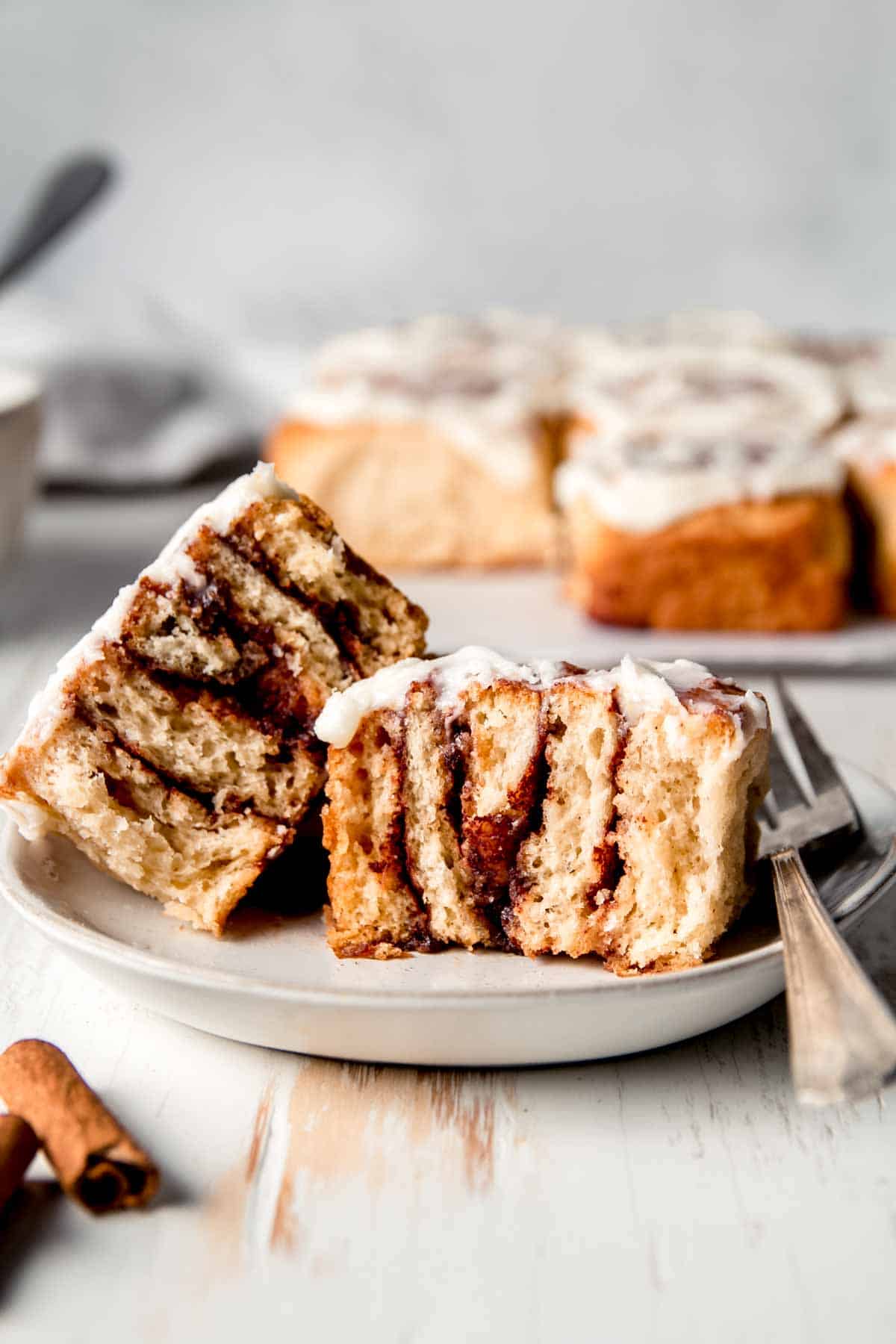
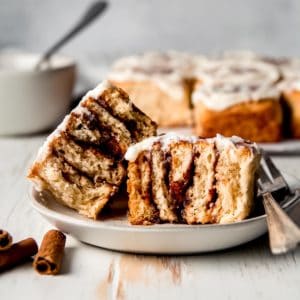
These gluten-free cinnamon rolls are soft, fluffy, and full of gooey cinnamon filling, with a tangy cream cheese frosting on top. Made with Caputo Fioreglut gluten-free flour, they're the closest I've gotten to a classic bakery cinnamon roll.
Jump to:
Katie's Recipe Notes
Long before I went gluten-free due to celiac disease, cinnamon rolls were a Christmas-morning tradition. If you've been gluten-free for any amount of time, you likely know how hard it is to adapt yeast-based recipes into a suitable gluten-free version. These were no exception. Like my gluten-free pizza and dinner rolls, they took a lot of testing to get right.
The exciting thing is, it's now one of my favorite Caputo gluten-free flour recipes, and in my not so humble opinion, the best gluten-free cinnamon rolls out there!
The dough is adapted from my gluten-free brioche bread, and as with my other gluten-free yeast bread recipes, it only needs one rise. You can even prep the rolls the night before, which makes them perfect for a make-ahead breakfast on Christmas morning.
November 2026 update: I recently revisited this recipe and decided it needed more filling. I've reflected that in the recipe card below. I also tried the heavy cream hack that's been going viral, and it works great with these rolls. I highly recommend it! Finally, I made rolling and cutting instructions easier to follow so you get exactly 9 rolls.
Ingredient Notes and Substitutions
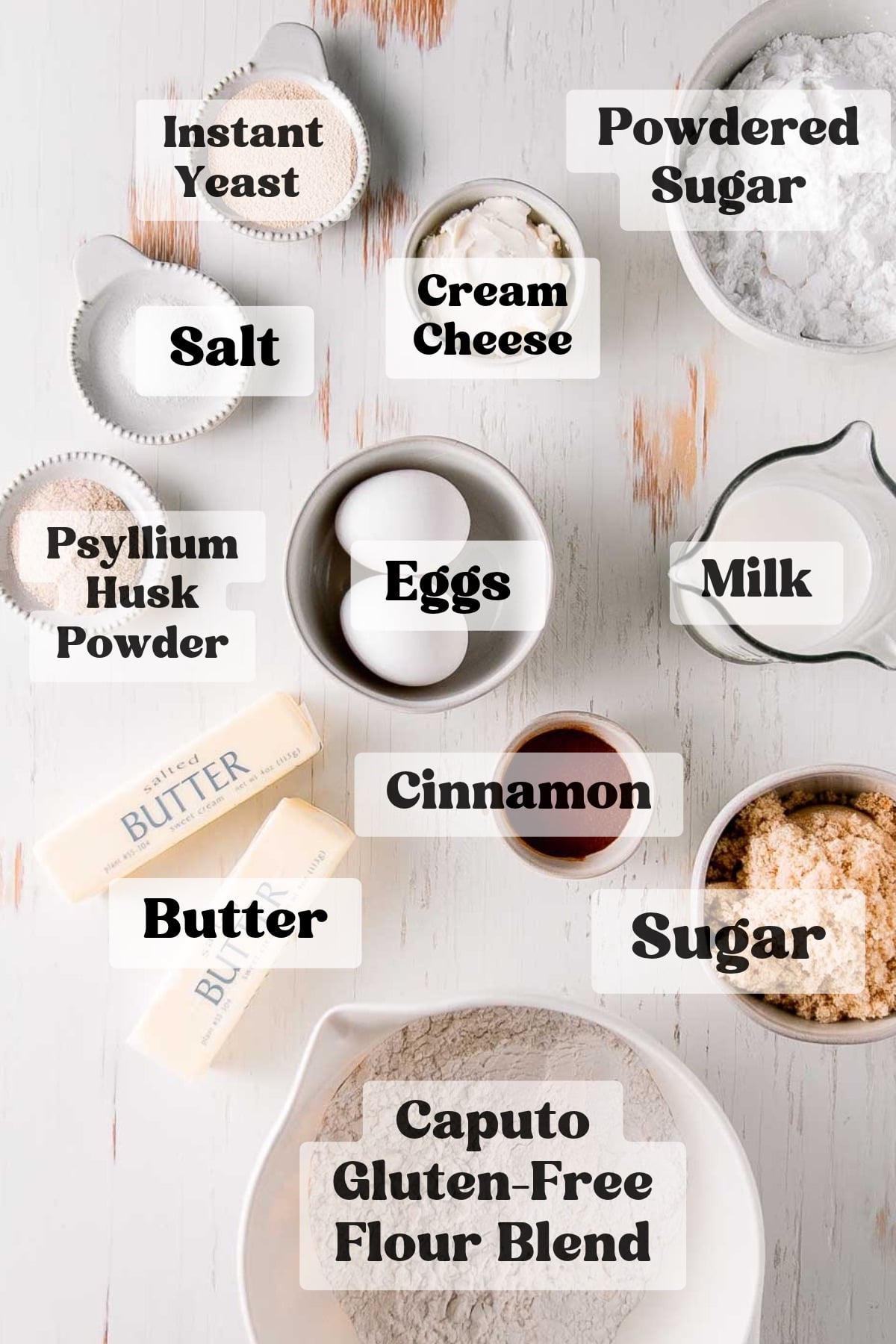
- Caputo Fioreglut flour: This is the only flour blend that works in this recipe. Its gluten-free wheat starch is what gives the rolls their soft, bready texture. It's certified gluten-free (under 20ppm) and safe for celiac disease, but not safe if you have a wheat allergy.
- Instant yeast: Also sold as rapid rise or bread machine yeast. Make sure it's fresh. If you only have active dry yeast, dissolve it in the warm milk and egg mixture first.
- Psyllium husk powder: It helps the dough hold together when you roll and slice it. If you only have whole husk, use about 15% more. I do not recommend omitting it.
- Dairy-free and egg-free: Almond milk and vegan butter sticks work in place of the milk and butter. I haven't tested an egg-free version.
- Frosting: A simple powdered sugar icing works instead of the cream cheese frosting.
Get the Goods!
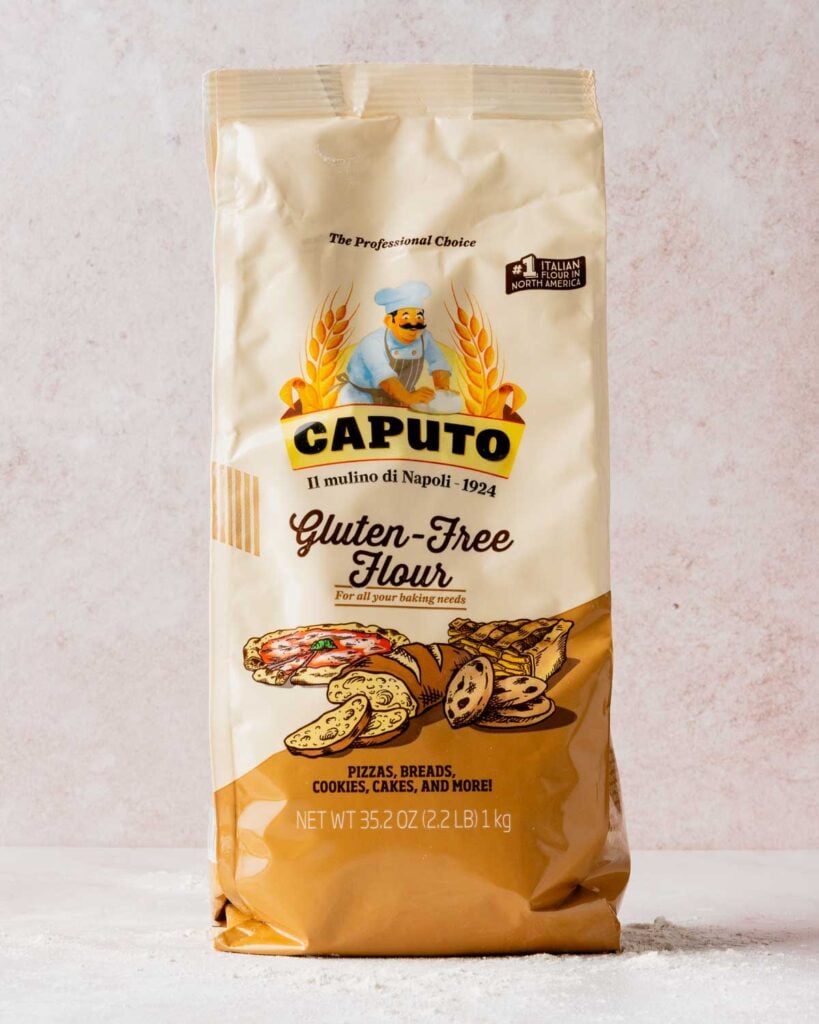
Caputo Fioreglut Gluten-Free Flour
I recommend you buy Caputo Gluten-Free Flour (formerly Fioreglut) from Brick Oven Baker. They have great prices and you can use code: KATIE for 10% off your first order!
Equipment
- Digital kitchen scale: Cups aren't accurate with this starchy flour. A basic scale costs around $10.
- Stand mixer with paddle attachment: The dough is too thick for a hand mixer.
- 9-inch square pan
- Parchment paper: Keeps the soft dough from sticking to your counter.
- Unflavored dental floss: Slices the rolls cleanly without squishing them. A serrated knife works too.
- Rolling pin
How to Make Gluten-free Cinnamon Rolls
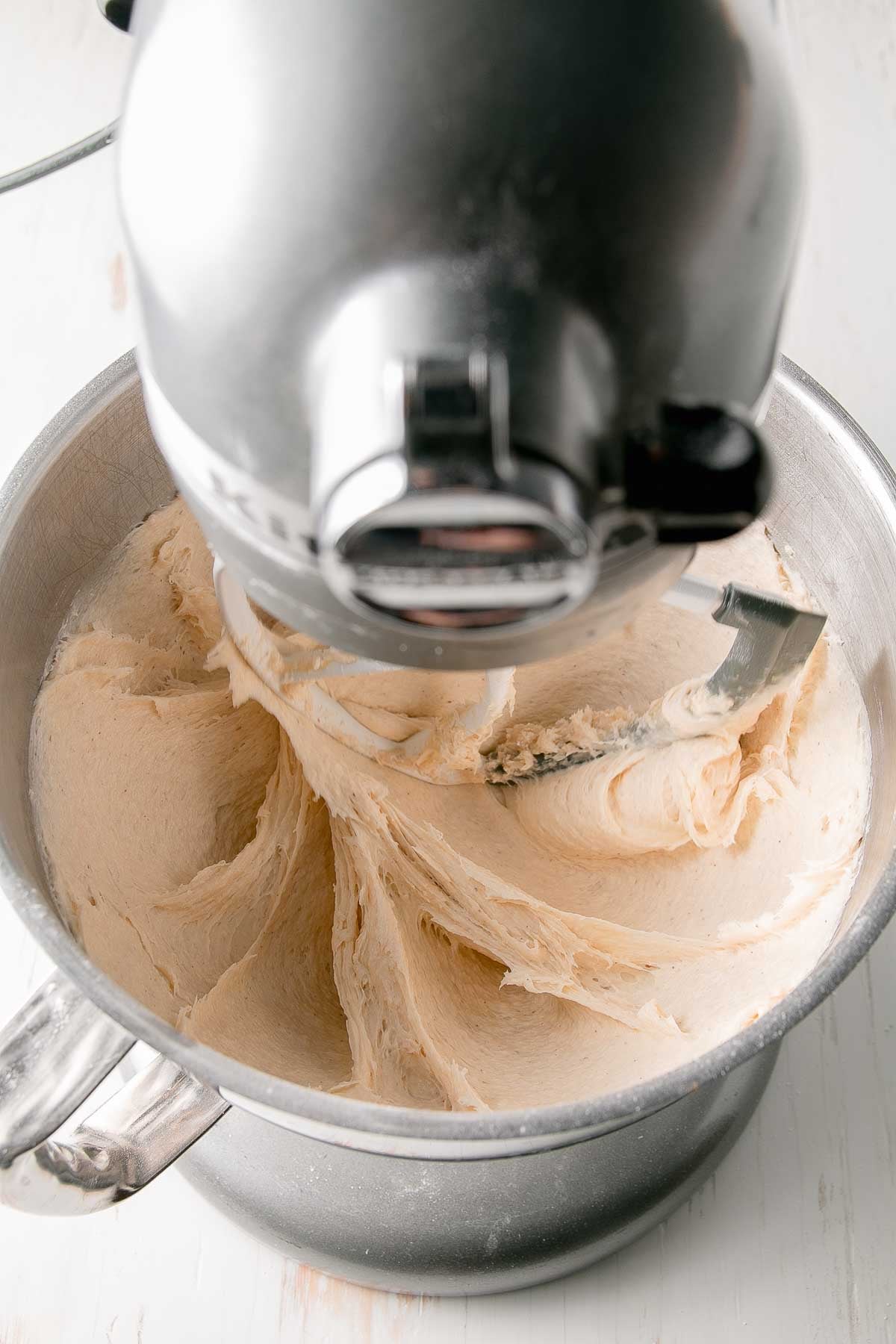
- Step 1: Whisk the flour, brown sugar, psyllium husk powder, yeast, and salt in a stand mixer. Warm the milk and eggs to 120-130°F, mix them in, then add the softened butter and mix until smooth and thick. Let the dough rest 10 minutes.
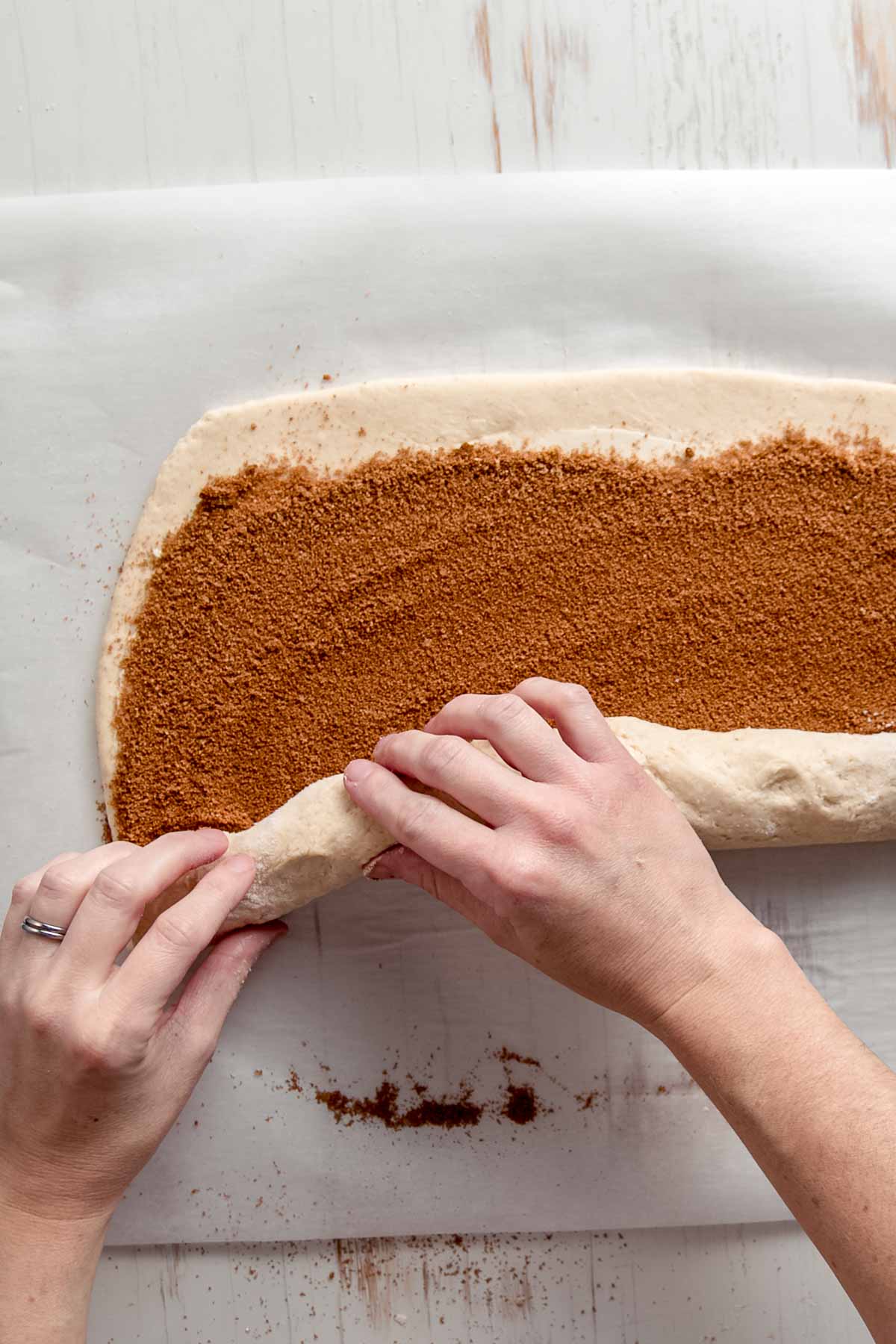
- Step 2: On floured parchment, roll the dough into a 12-inch square. Spread with the very soft butter, sprinkle with the cinnamon-sugar, then roll it into a log, lifting the parchment to help.
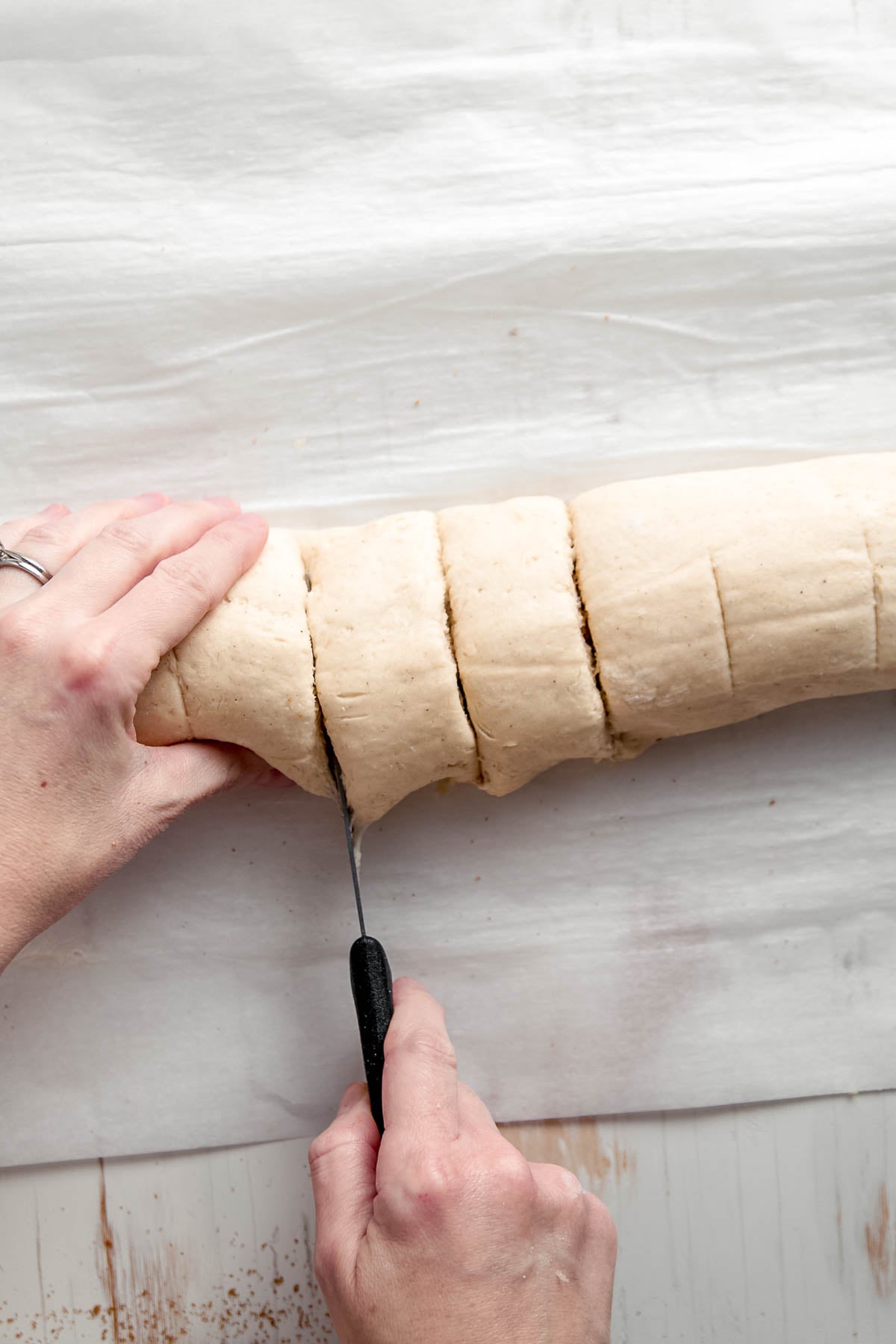
- Step 3: Cut the log into thirds, then each third into three rolls. The dental floss hack works best, but a serrated knife works too.
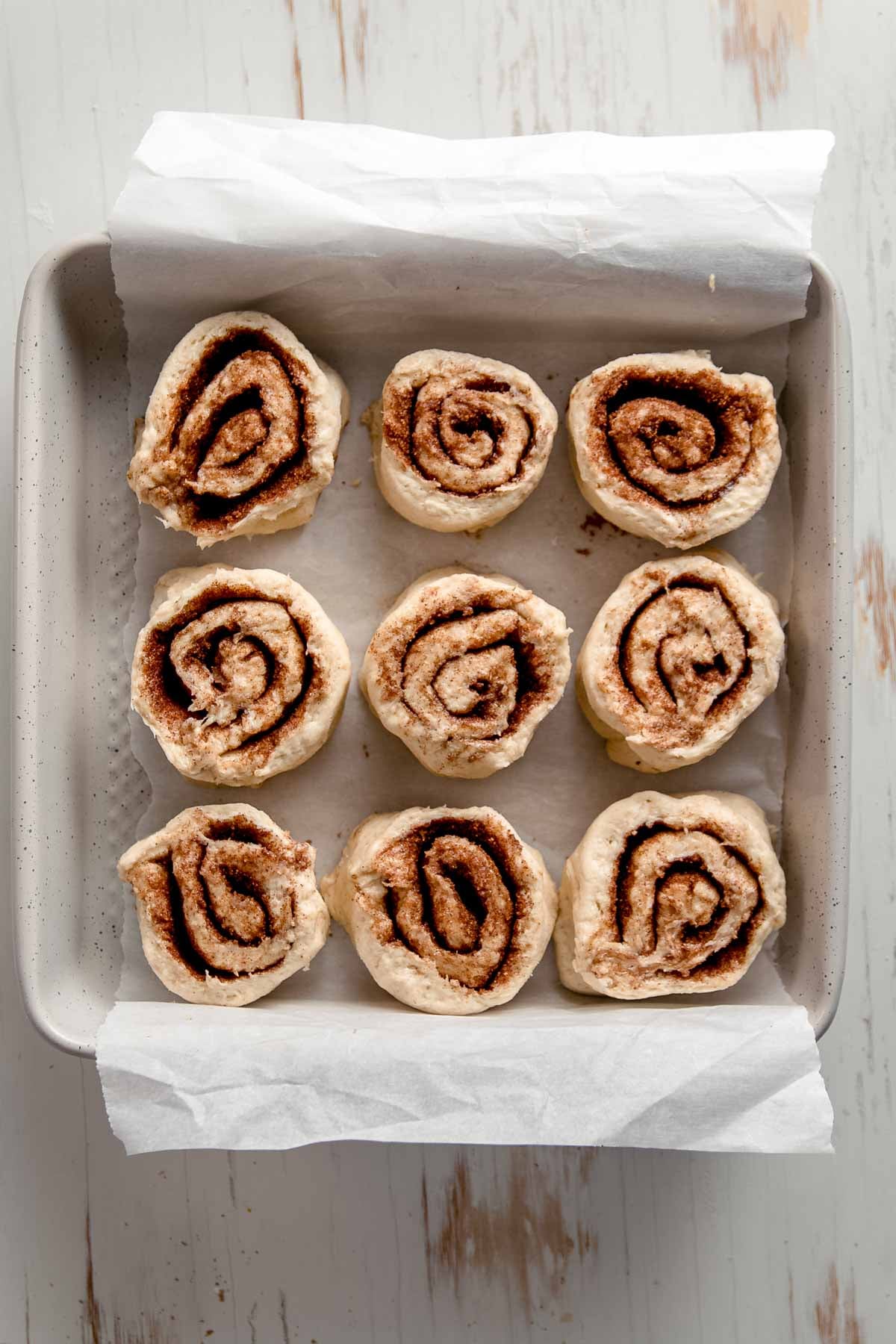
- Step 4: Arrange the 9 rolls cut side down in a greased 9-inch square pan.
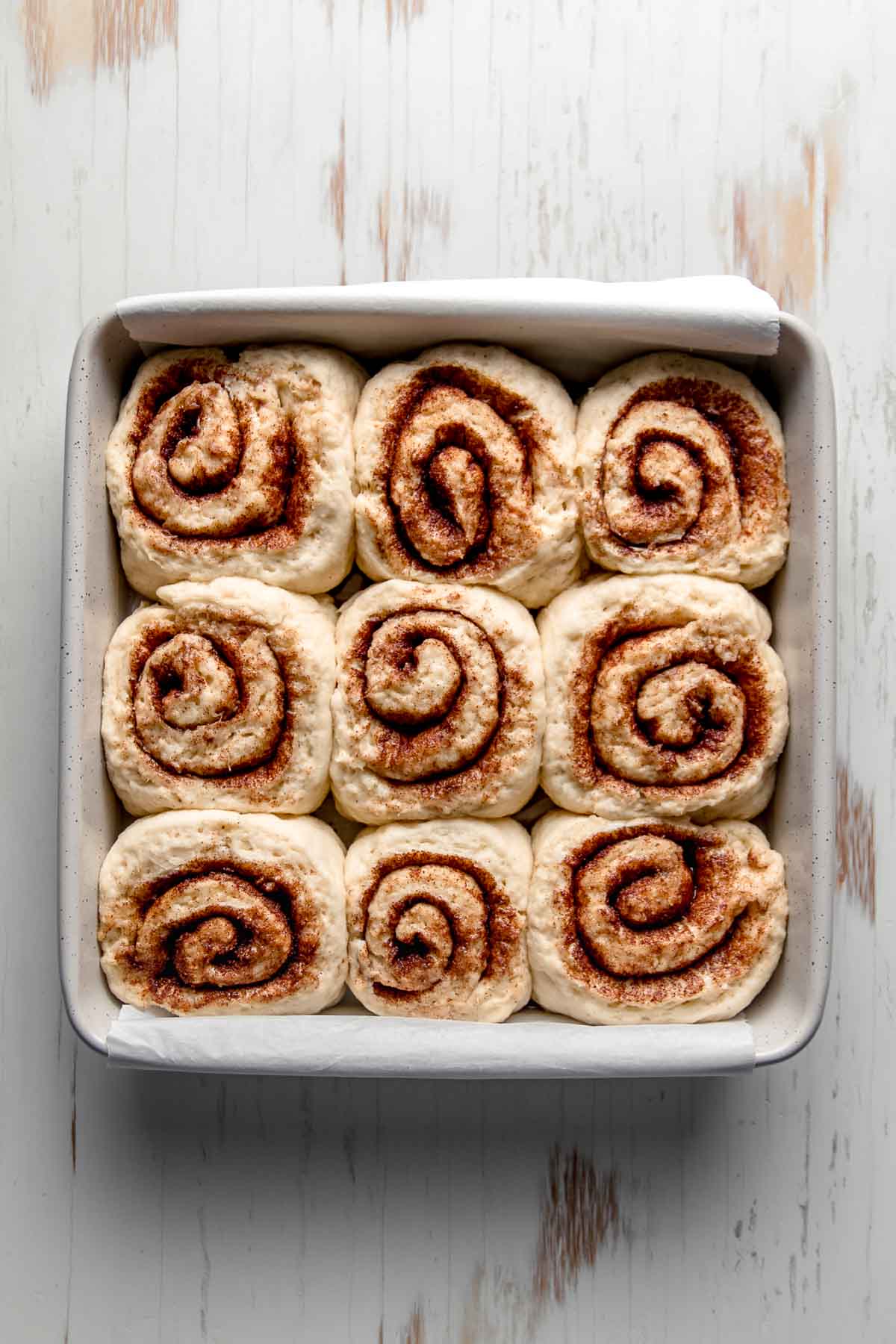
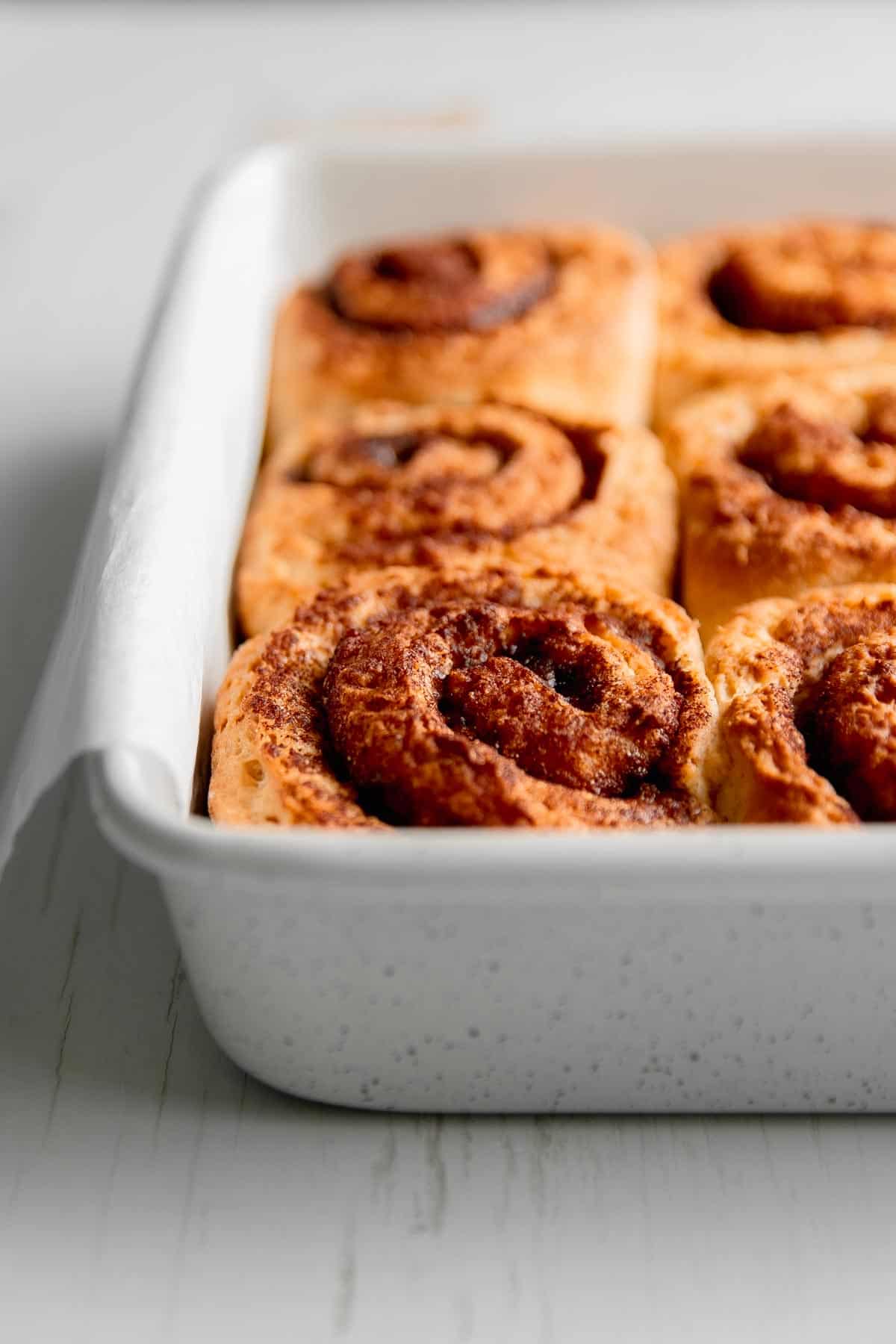
- Step 5: Cover and let rise in a warm spot until visibly puffy, about 1 hour. (Optional: pour ⅓ cup heavy cream over the risen rolls.) Bake at 350°F for 25-30 minutes, until golden.
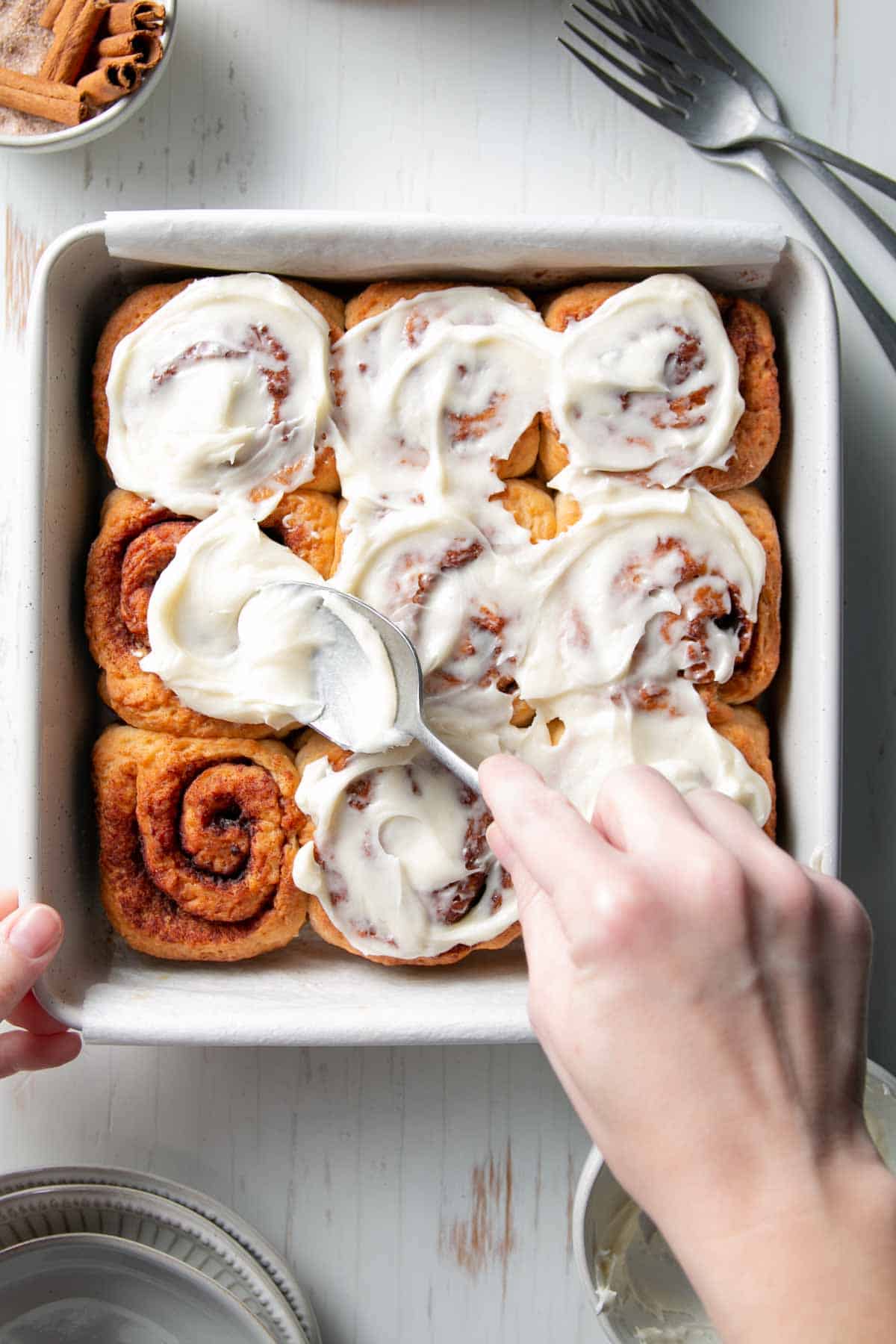
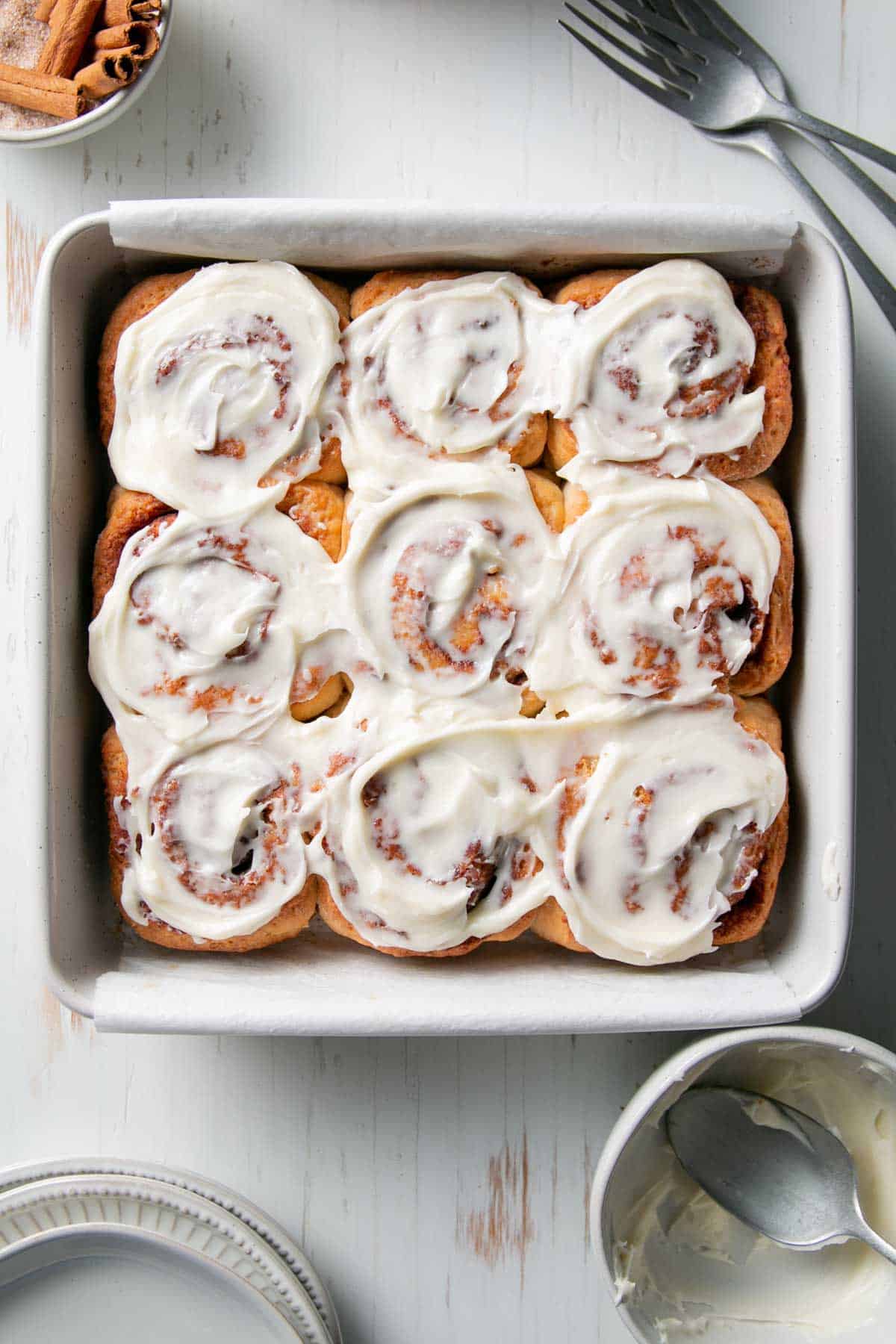
- Step 6: Let the rolls cool 10-15 minutes, then spread with the cream cheese frosting.
Make Ahead Instructions
I think these are best baked the same day, but if you want a head start, here's how I make them ahead.
- Rise, Then Refrigerate (Quicker): Let the shaped rolls rise, then cover and refrigerate overnight. In the morning, bring them to room temperature and bake. To speed this up, set the pan in the microwave next to a mug of just-heated water and close the door.
- Refrigerate, Then Rise (Slower): Cover and refrigerate the rolls right after shaping. In the morning, let them rise until puffy, about 4 hours.
- Frosting: Make it up to a day ahead and refrigerate. Let it soften while the rolls bake.
- To Freeze: Let the rolls rise in a parchment-lined or disposable pan, freeze until solid, then wrap tightly in plastic wrap and foil. Thaw overnight in the fridge (back in the pan) and let them sit at room temperature for an hour before baking.
Storage
These are best warm from the oven, but leftovers keep at room temperature for up to 2 days. Gluten-free bread firms up as it sits, so I warm each roll in the microwave for about 15 seconds to soften it up again.
Important Tips to Remember
- Weigh your flour. Caputo Fioreglut is really starchy, so measuring by the cup can throw off the whole recipe. A scale is the only way I get consistent results.
- Check the temperature of the milk and eggs. If the mixture is cooler than 120°F, the yeast won't really get going, and if it's a lot hotter than 130°F, you risk killing it. I use a thermometer every time.
- Stick to the recipe for the dough. I tested a lot of versions to get here, so I can't promise how swaps will turn out beyond the ones in the ingredient notes.
Recipe FAQs
It's supposed to be! Gluten-free yeast dough is much softer than regular dough, and that's what makes these rolls fluffy. Weigh your ingredients, let the dough rest for 10 minutes so the psyllium can hydrate, and roll it out on well-floured parchment. If it's still hard to handle, chilling it for about 30 minutes helps. Try not to add a lot of extra flour, or the rolls will turn out dense.
Fioreglut is designed for pizza, which doesn't need much shaping. The extra psyllium makes the dough easier to roll and slice, and it lets the dough hold more liquid, so the rolls stay soft instead of dense and dry.
If gluten-free dough rises first, rolling it out squishes out the trapped air, and it won't rise as well the second time. Shaping first and rising once gives you fluffier rolls.
Make sure you whisk the dry ingredients together well first, so the psyllium is evenly mixed in, and use a stand mixer with the paddle attachment. The dough is too thick to mix well by hand.
It should look noticeably puffy, though gluten-free dough won't rise as dramatically as wheat dough. A warm spot (about 80-85°F, like a turned-off oven with the light on) helps. Press it gently: if the dent fills in slowly, it's ready.
More Caputo Gluten-Free Flour Recipes
Looking for more Caputo gluten-free flour recipes? Try my gluten-free pan pizza or one of these:

Recipe
Gluten-Free Cinnamon Rolls with Caputo Fioreglut
Video
Equipment
- Stand mixer with paddle attachment
- 9-inch square pan
- unflavored dental floss
Ingredients
Dough
- 280 g Caputo Fioreglut gluten-free flour blend
- 70 g brown sugar (⅓ cup packed)
- 7.34 g psyllium husk powder (2¼ teaspoons)
- 7.87 g instant yeast (2¼ teaspoons)
- 3.5 g table salt (½ teaspoon)
- 185 g milk (¾ cup)
- 97 g eggs (2 large eggs, at room temperature)
- 113 g butter (½ cup or 8 tablespoons, softened)
Cinnamon Filling
- 113 g butter (½ cup or 8 tablespoons, very soft)
- 110 g brown sugar (about ½ cup packed)
- 30 g granulated sugar (about 2 tablespoons plus 1 teaspoon)
- 8 g ground cinnamon (about 1 tablespoon)
Cream Cheese Frosting
- 113 g cream cheese (½ cup or 4 ounces, softened)
- 28 g butter (2 tablespoons, softened)
- 100 g powdered sugar (about 1 cup)
- ¼ teaspoon vanilla extract
Instructions
Make the Dough
- In the bowl of a stand mixer, whisk together the flour, brown sugar, psyllium husk powder, yeast, and salt.
- Warm the milk in the microwave until lukewarm. Add the eggs directly to the milk and whisk until combined. Microwave the mixture in short bursts, checking the temperature between, until it reaches 120-130°F.
- With the mixer on speed 2, slowly pour the warm milk and egg mixture into the dry ingredients. Increase the speed to medium and mix for about 1 minute. Add the softened butter for the dough and mix on medium for about 2 minutes, until smooth and evenly combined. Scrape down the bowl as needed.
- Let the dough rest for 10 minutes, or refrigerate it to roll out later. While it rests, grease a 9-inch square baking dish and cut a 12-inch square of parchment paper.
Fill and Shape the Rolls
- Lightly dust the parchment and rolling pin with gluten-free flour. Roll the dough into a 12-inch square, using the edges of the parchment as a guide.
- For the filling, spread the very soft butter over the dough, leaving a narrow border along one edge. Mix the brown sugar, granulated sugar, and cinnamon, then sprinkle evenly over the butter.
- Roll the dough into a log. Gently pat the seam together.
- Cut the log into thirds, then cut each third into three equal rolls, ending with 9 rolls. Arrange the nine rolls cut side down in the prepared dish. Dental Floss Tip: To cut the rolls, slide a piece of unflavored dental floss underneath the log, criss-cross the ends over the top, and pull them in opposite directions to slice through.
Let the Rolls Rise and Bake
- Cover the rolls and let them rise in a warm spot until visibly puffy. For the best results, shape, rise, and bake them on the same day. **See the recipe notes for a tip about heavy cream and overnight options.
- Bake, uncovered at 350°F for 25-30 minutes, until golden brown. Let the rolls cool for 10-15 minutes before frosting.
Make the Frosting
- Beat the softened cream cheese and butter for the frosting until smooth. Beat in the powdered sugar and vanilla, then spread the frosting over the warm rolls. Enjoy warm.
Notes
Make-Ahead Options
Rise First then Refrigerate Overnight (Quicker): For a quicker morning, let the shaped rolls rise until visibly puffy. Cover and refrigerate overnight. In the morning, bring the rolls to room temperature, then bake as directed. To help them warm up quicker, warm a mug of water in the microwave, then place the pan in the microwave and close the door. Refrigerate then Rise In Morning (Takes Longer): Cover and refrigerate the rolls as soon as they’re shaped. In the morning, let them come to room temperature and rise until visibly puffy. This took about 4 hours in my test. To help them rise, warm a mug of water in the microwave, then place the pan in the microwave and close the door.Save This Recipe!
Estimated Nutrition
* Nutritional information is provided as a courtesy and should be used as an estimate only. See the nutrition policy for more information.

Jaime says
I had an epic fail with this recipe. It resembles tapioca pudding more than a dough. I assume it’s the psyllium powder clumping. Such expensive ingredients to end up throwing it all away. 🙁
Katie Olesen says
Hey Jaime, I’m sorry you had trouble! Did you use a scale for your measurements or make any substitutions? I’d be happy to help troubleshoot. The dough is pretty soft—psyllium needs a moment to hydrate—and it does take a gentle touch to roll out. It’s a tricky recipe, but you can absolutely master it. The softer dough makes for a fluffier roll; if there isn’t enough moisture, that’s usually when it ends up dense. Let me know if you want to dive deeper into this!
Margaret Evans says
Just made this in Denver for Christmas as a gluten free dairy free alternative to the usual family Christmas wreath cake. I subbed in a mix of dried apricots and tart cherries with a sprinkle of cinnamon and nutmeg for the brown sugar filling. I am very pleased with the result. I did not have access to a stand mixer and mixing was a challenge with the hand mixer. Made do and then spread dough with my hands instead of a rolling pin. Worth making again for sure!
Adelaide says
These were the best GF cinnamon rolls I’ve made so far! I think I’ll increase the amount of cinnamon sugar filling for next time, but these are wonderful. I topped with an egg wash and Swedish pearl sugar before baking for a dairy free topping. Thanks so much for the delicious recipe!
Debora Erdmann says
Do I make the psyllium husk into a gel before or does it go right it?
Katie Olesen says
I do not use the gel method. I find it easier to mix it right in with the dry ingredients as stated in the recipe instructions.
Kelly Weiss says
The recipe was easy just follow and I was able to roll it out easily. This is the first time using yeast with gluten free fare. I’ve been gf for 15 years and my almond & coconut flour choices couldn’t compare.
I don’t eat sugar so I tried date sugar, I’ll use dates with cinnamon next time- the only part of “my” recipe to make the cut.
Thanks for the bliss!
Tony says
I didn’t have any separate psyllium powder so I used an additional 1/4ish cup flour, turned out great, very workable dough. I upped the filling cinnamon/sugar by about 50%.
diana says
Looks delicious! Can I use flora light instead of butter to keep the calories down?
Thank you
Katie Olesen says
I haven't tried this specifically so I can't say for sure.
Janine says
Do you think this cinnamon roll dough would work well for doughnuts?
Katie Olesen says
This is something I have not tried but that is a great suggestion!
Deana says
I want to sing and dance in the Milky Way after baking and, more importantly, eating these cinnamon buns (we can them buns, not rolls, where I come from). With several GF baking disappointments to my name, I made these with great trepidation but needn't have worried as between the excellent instructions and the comments, the whole process was fairly easy. Next time, I will use more flour on the parchment paper as in the spots where it was sparse, the dough did stick. Once they were a day old, they were still very tasty. Two days old and refreshed in the microwave - meh! Better to bake and eat them right away! Thank you for your work in developing your recipe using Fioreglut.
Lydia says
These taste great! I’ve made this recipe twice and both times it was very sticky to the point of being nearly unworkable. The rolls have no shape, I have to use a lot of flour when rolling out, and they become one massive cinnamon roll in the pan when they rise. They look like a wreck even though they taste great. And yes, I used a scale both times. If I want to make the dough a little less sticky, do you think it would it better for me to add more flour or cut back a bit on the liquid?
Also, how would I know if my rolls have risen too much?
Thank you!
Katie Olesen says
Sorry to hear you're having trouble but I am glad you enjoy the taste of the rolls. I think you could add a bit more flour or even a bit more psyllium. If you add a little more flour, they will still be fine, just be a bit more dense. It is a soft dough but that's what makes them more fluffy. I always use a very gentle hand when rolling and shaping. Next time I make them I will look into modifying the recipe a bit to make it more workable. Thanks for the feedback!
Lydia says
My nephew is celiac so I’ve been trying to find a good cinnamon rolls recipe for him. He gives this one a thumbs up! I will try adding more flour and/or psyllium husk and if I find a method that helps, I’ll report back. Thank you!
Flicka&Coop says
These were just as good as what I remember cinnamon rolls tasted like before I couldn't eat wheat. The Caputo flour makes a huge difference from other recipes and it is my opinion that the psyllium husk is also key. I made the day before Christmas and took out of fridge a few hours before we ate them Christmas morning. Everyone raved about them!!
Flicka&Coop says
Oops - forgot to mention that I took them out of the oven for the dough to get to room temp and then baked them on Christmas morning. I did not bake the day before!!
Sam says
Any experience using sourdough starter instead of yeast in this recipe?
If so how much starter would you use?
Katie Olesen says
Unfortunately, I have not tried sourdough starter for this recipe.
Lora says
I haven't made these yet..... but can you refrigerate the dough a little bit before rolling out to help with the sticking??
Katie Olesen says
Absolutely you can! Also feel free to use some flour on parchment paper to help with the process.
Warren says
As written the receipe gave me a sticky mess that could not be rescued. I have been baking with GF flour for 15 years - and this did not work for me. What did work was the normal Caputo bread mixture, but made with milk/egg for the liquid, and add melted butter just before the flour is completely smooth
Katie Olesen says
Hi Warren, I am curious if you made any other substitutions or omissions to the recipe? The dough tends to be on the sticky side, but that's what gives the end result a fluffy texture rather than denseness. GF bread doughs are known for their stickiness, so with your years of experience, this shouldn't be surprising.
Double-check that you've added the psyllium husk, ensure you've mixed for the specified 2 minutes, and if needed, let the dough sit for a few minutes to absorb excess moisture before rolling it out. The dough requires a gentle touch, but it is workable. Hope that helps.
Sarah says
Hi there, does refrigerating overnight dramatically change the texture or volume of the rolls? Thanks!
Katie Olesen says
Let them rise first and then refrigerate overnight. The texture and volume should be spot on if you do it that way!
Sarah says
Thank you!!
Sarah says
These were fantastic. Made them and after rising, refrigerated them overnight. They were perfect!
Krista says
These were delicious! pillowy and soft and easy to make... YUM!
Shaila says
I made this as per the recipe and they turned out absolutely sublime!! They look better in real life than the pictures in the recipe. It takes a while due to a few steps, and the dough is a little soft and sticky, so patience is needed. The end result was worth it. They were gone by the end of the day.