



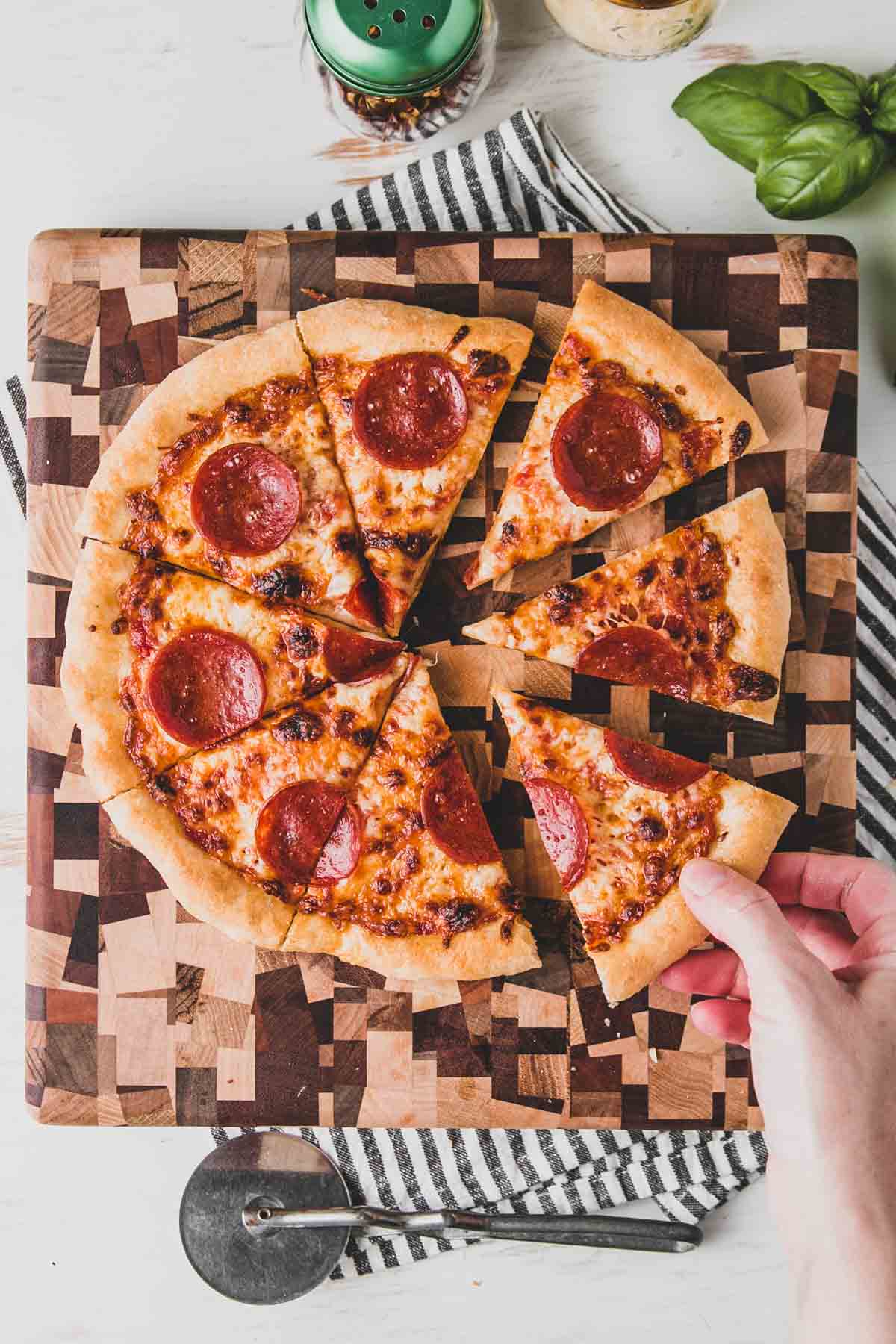
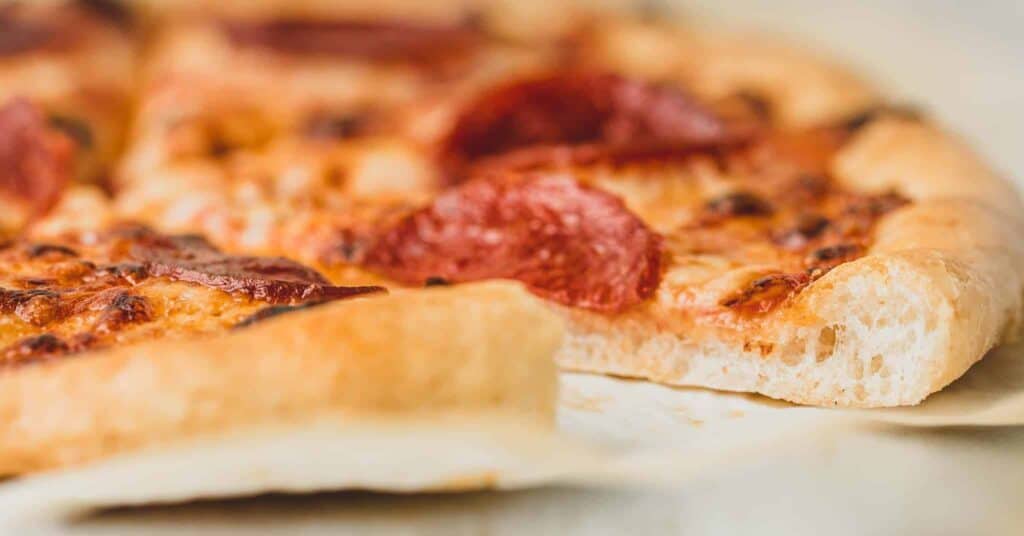
Do you miss pizza that tastes like pizza? I did too, but not anymore! Make this gluten-free pizza dough for the most delicious homemade pizza that actually tastes like pizza!
Jump to:
If you're gluten-free, there's probably one thing you're searching for... good pizza. Oh man, is it hard to find! Over the years, I have tried basically every pizza mix I could find on the market.
While there have been one or two that I have found to be good, the pizza was still not quite right. Whether in flavor, texture, or both, there was always something a bit off.
That is until I took a visit to a restaurant in a Chicago suburb that specializes in wood-fired pizzas. They are well-known in the area for making delicious gluten-free pizzas. I can attest, they are very good!
So what was the secret? How were they doing it? Well, oddly enough they give away the secret right on their menu! They share that they use a special gluten-free flour, direct from Italy, to make these amazing gluten-free pizzas! Thanks to Amazon, you can ship some of it right to your front door!
Needless to say, I've been using this flour ever since to make my own gluten-free pizzas right at home! My family agrees it is the best gluten-free pizza we have had because it actually tastes like normal pizza!
This versatile dough can be used to make a pizza in your oven or even outdoors in a wood-fired pizza oven! If you're making this pizza for the wood-fired oven, check out my post dedicated to gluten-free pizza in the Ooni for all the tips and tricks! Although for today, I will be sharing how to make this pizza in your home oven.

Get the Goods!
Caputo Fioreglut
I recommend you buy Caputo Fioreglut from Brick Oven Baker. They have great prices and you can use code: KATIE for 10% off your first order!
The Flour: Caputo Fioreglut
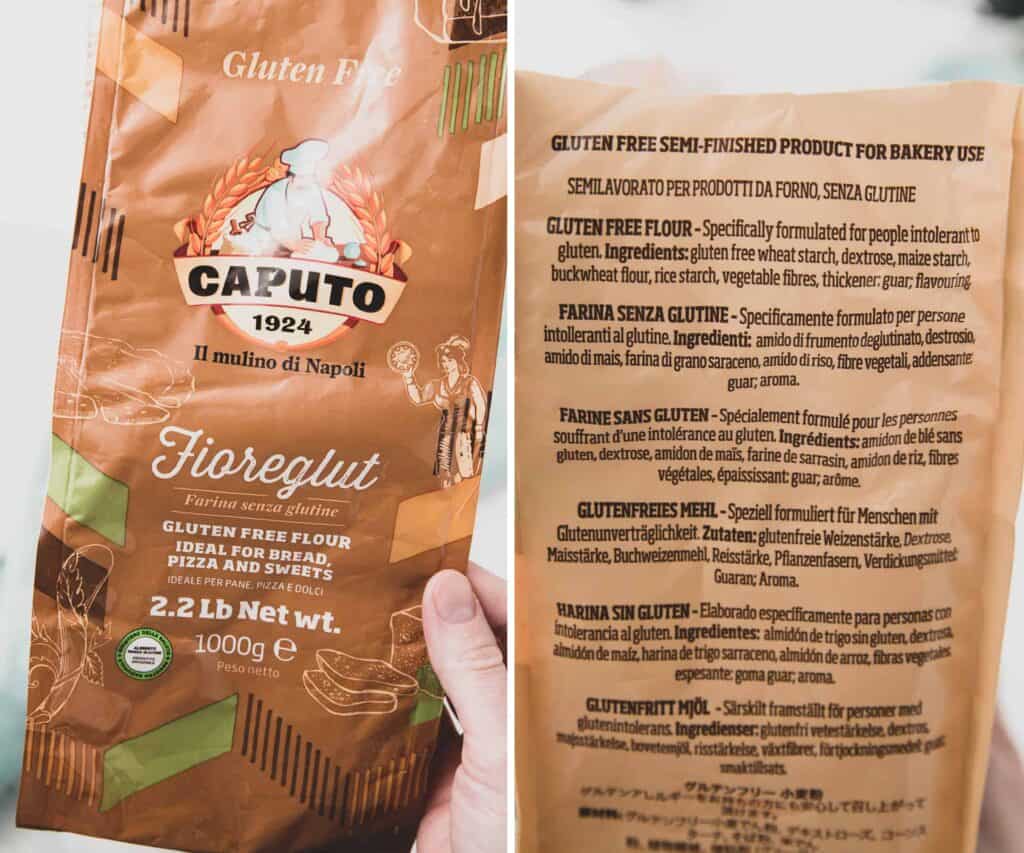
Let's talk about that special flour for a second. Using this specific flour, Caputo Fioreglut, is the secret to making the best gluten-free pizza at home. You can surely make this recipe with another flour but I doubt it will be quite as good.
To find it, just search Caputo Fioreglut either on google or Amazon. It's should be about $15 or less for a 2.2lb bag. You will be able to make at least four pizzas out of one bag, which comes out to roughly $3.75/pizza crust. That is not bad compared to other gluten-free pizza options, especially since this one actually tastes good!
Gluten-free Wheat Starch
A quick look at the ingredients and you might notice something... gluten-free wheat starch. Wait! What? I know. Don't quit reading and run for the hills quite yet!
Gluten-free wheat starch is an ingredient that is not only gluten-free but it's also safe for people with Celiac Disease. I personally was shocked the first time I ever saw it in a list of ingredients, which was long before this flour!
I actually saw it first on a package of Schar Gluten-free Crescent Rolls. Instead of immediately ruling it out, I did a little research to learn more about it. Here's what I found:
Schar, a well-respected gluten-free brand, uses gluten-free wheat starch in some of their products and has been for years! It's used to enhance the texture of certain products. They wrote a really great article about gluten-free wheat starch, what it is, and what it's used for. Make sure to read it! It's very informative.
When I was researching this particular flour, I noticed that little green symbol on the front of the bag. The words are in Italian so I popped it into Google Translate, it reads: "Ministry of Health National Register, Gluten-free food dispensable product."
Turns out, that is Italy's symbol indicating that this gluten-free food is produced and safe for those with Celiac Disease. In order to display that symbol, documentation must be supplied to the Ministry of Health that the level of gluten in the product is <20ppm of gluten.
During this research, I also found out, other than I want to move to Italy, that they provide those with Celiac Disease a monthly stipend of 140 euros to spend on gluten-free foods, including this flour! Talk about amazing seeing as the financial cost of this disease can definitely put a strain on the budget!
Alright then, let's get on with pizza making!
The Other Ingredients
Aside from our special flour, here are remaining ingredients you'll need for this pizza dough:
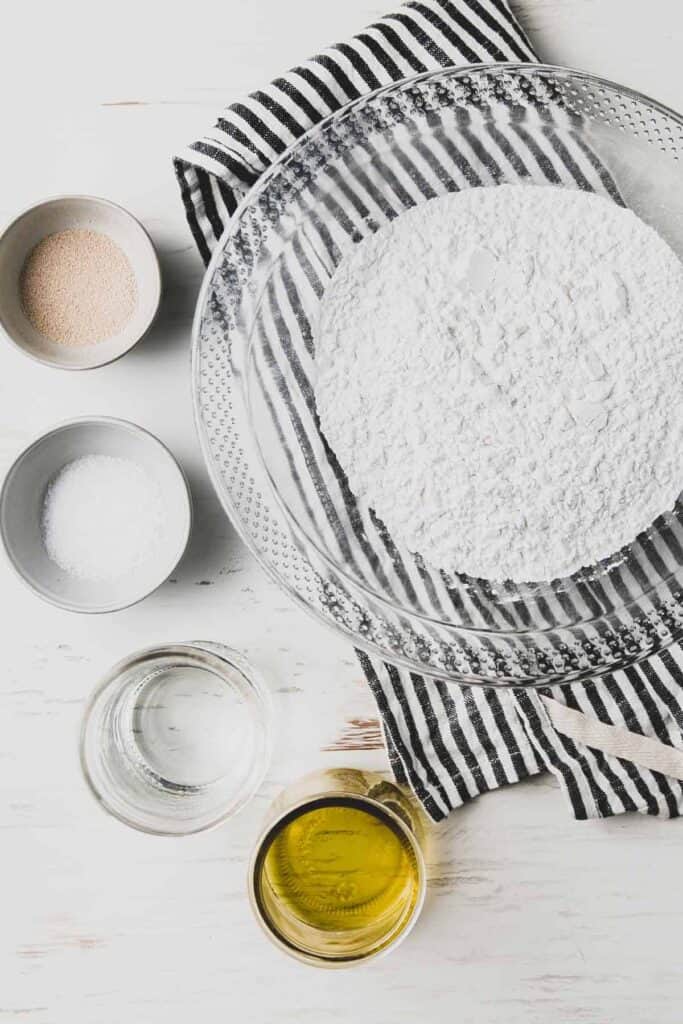
- Instant Yeast: Always get Instant Rise, Rapid Rise, or Bread Machine yeast. Those different names for yeast are actually all the same type of highly active, fast-rising yeast. Instant yeast is the easiest to use, especially for gluten-free baking! You can mix the yeast right in with the dry ingredients without dissolving in water first.
- Kosher Salt
- Olive oil
- Water
There you have it. Only 5 ingredients are needed to make the best gluten-free pizza dough!
Equipment Needed
There are some tools that come in handy for making pizza at home. You don't need any or all of them but if you're into making pizza, these are the tools that help:
- A digital kitchen scale: I especially like to measure the flour and water by weight. I will include cup measurements as well but weighing the ingredients is the most accurate.
- A stand mixer: I usually make this dough in my stand mixer but in case you don't have one, I will show you that you can also mix it by hand. It takes a little more elbow grease but the results are the same. (Please note: I would not use a hand mixer for this recipe. The dough is pretty thick and will likely break the motor.)
- Parchment paper: The dough is sticky and parchment paper helps immensely in rolling out and forming the crust.
- A pizza stone, steel, or cast-iron pan. Something that can rest in the oven and get very hot! This helps the crust get a crispy bottom. Please note, cheap pizza stones can break at high temperatures. My preferred option is a cast-iron pizza pan. They are affordable and will never break! If you don't have or want to buy one, you can make the pizza on a standard pizza pan or cookie sheet although your pizza may not get quite as crisp on the bottom.
- A pizza peel often comes in handy for getting the pizzas into and out of the oven. A flat rimmed cookie sheet or flat pizza pan could also work.
Making the Dough
A lot of people get intimidated by the word yeast. It brings to mind complicated recipes and techniques. When it comes to gluten-free baking and especially this pizza dough, you really don't have to fear. If you can measure and stir, you can make this recipe!
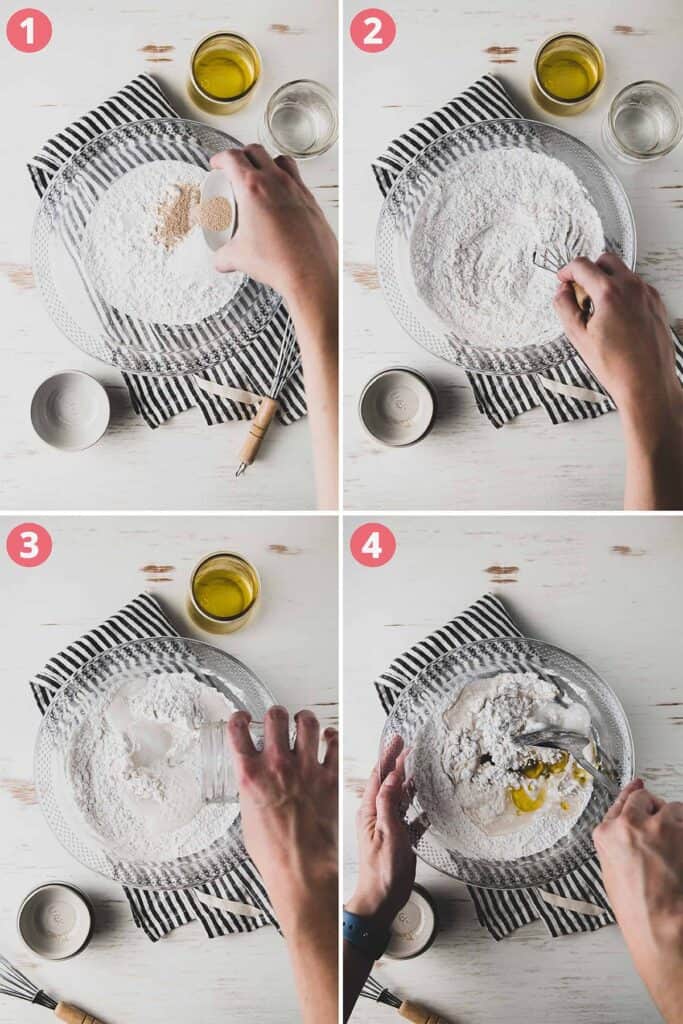
Step 1 (as seen in images below): Place the flour, instant yeast, & salt in a large bowl or stand mixer bowl.
Step 2: Whisk them together.
Save This Recipe!
Step 3: Pour in warm water & olive oil.
Steps 4, 5 & 6: Stir, Stir, Stir! Mix and mash with a sturdy spoon until the dough is very well combined. If using a stand mixer, blend on medium speed for 2 minutes using the regular paddle attachment.
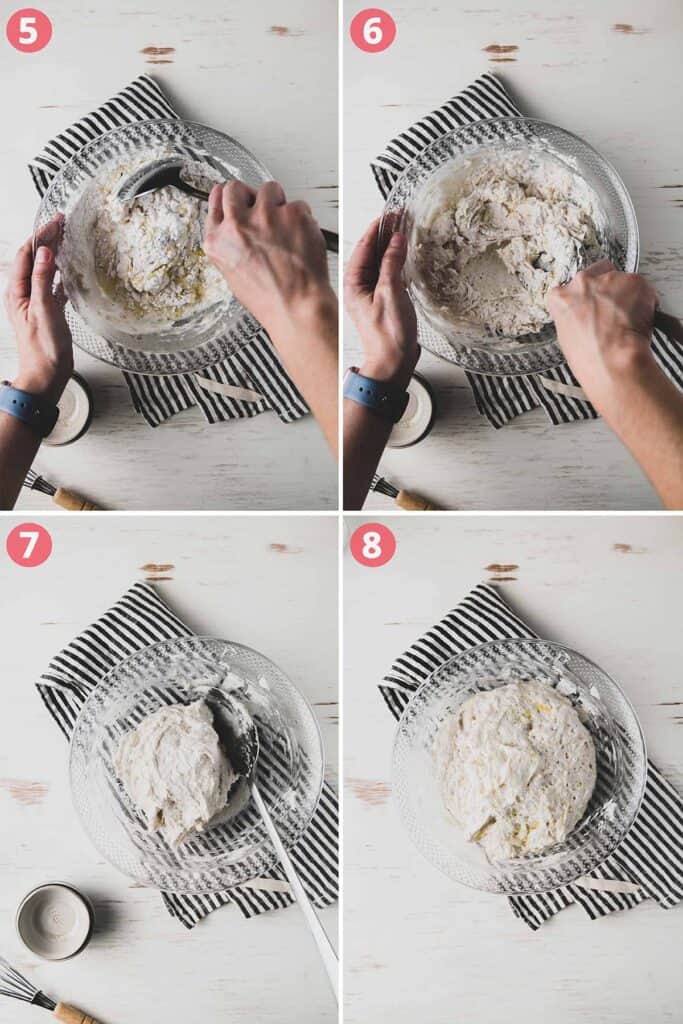
Step 7: At this point the dough will be very sticky, the texture of buttercream frosting. Scoop the dough into a ball and drizzle with a little olive oil. Roll the ball around to coat the dough and sides of the bowl with the olive oil. Cover the bowl with plastic wrap and then a dish towel. Set aside to let rise until doubled in size, about 1 hour.
Step 8: After the dough has doubled in size, you can form pizzas right away or place the covered bowl in the refrigerator until ready to use.
Pro-tip: The dough is much easier to work with if you have time to refrigerate it first! Keep it cold until you are ready to form the pizzas! You can refrigerate the dough for several hours so feel free to make it ahead of time!
Forming the Pizza
Forming the pizza is the trickiest part, mostly because gluten-free dough doesn't have the same elastic structure that a gluten dough would have. For this reason, it's easiest to form the dough on a piece of parchment paper.
Sprinkle plain white rice flour on top of the dough to prevent it from sticking to your hands as you pat out the dough into a circle. You can also use a rolling pin covered in rice flour to gently roll out the dough if you like.
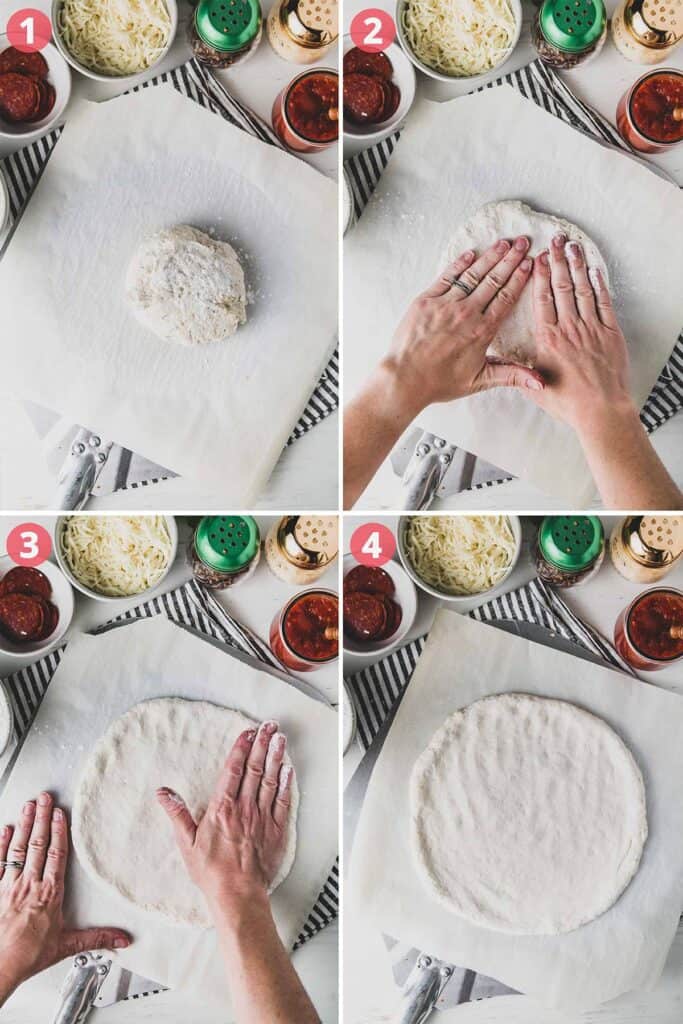
Pro-tip: if you like a thicker, softer crust edge, pat out the dough. If you like crispy, crunchy crust edges, roll the dough with a rolling pin. I've found the rolling pin flattens the edges more than when patting out the dough, which results in a crisper edge.
Cooking the Pizza
When it comes to cooking the pizza, there are a few tricks to getting the perfect gluten-free pizza in your home oven.
- You need a hot oven! The hotter the better! Crank the oven temperature to 450°F!
- Pre-heat the oven with your choice of pizza stone or cast-iron pan for at least 30 minutes.
- Pre-bake the crust. The dough takes longer to cook than the toppings, so pre-baking is necessary. Form the crust and then slide it into the hot oven, parchment paper and all. After 2 minutes or so you can pull the parchment paper out from underneath the pizza to get a crisper bottom.
After the crust has been pre-baked, you can top the pizza with whatever toppings you like and finish baking it in the oven.
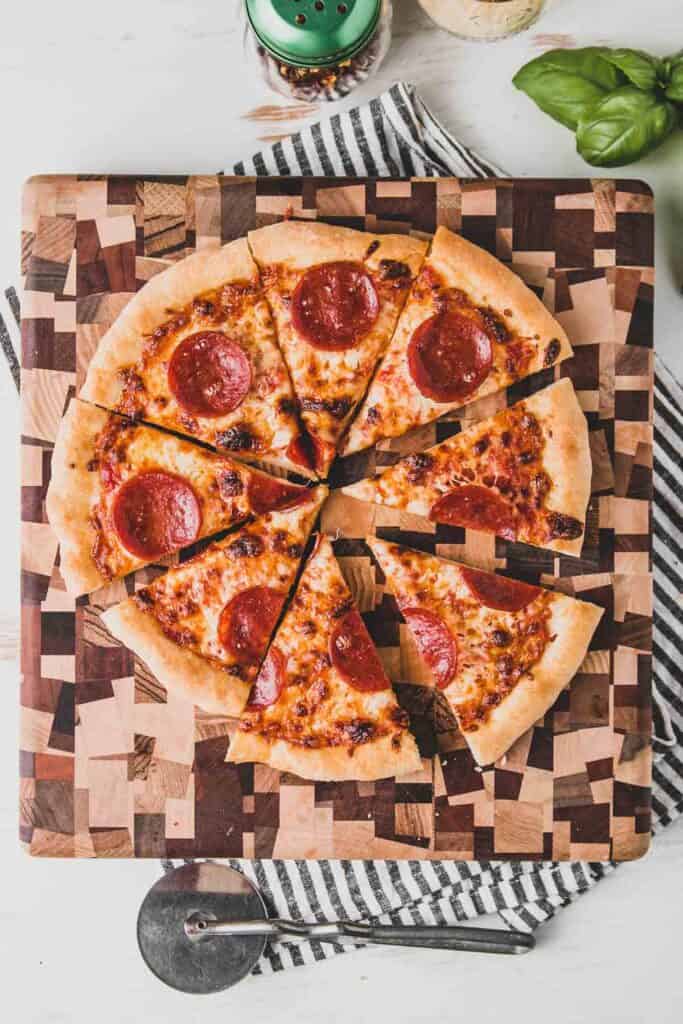
There you have it! All of my tips and tricks for getting the perfect gluten-free pizza right at home! If you have any questions, drop them in the comments and I will be glad to help you out!
The secret really is in the flour, so check out the links and grab a bag to try. Soon you will be making delicious gluten-free pizza that actually tastes like pizza! If you love this recipe, be sure to check out my gluten-free Chicago-style deep dish recipe as well!
More Gluten-Free Recipes with Fioreglut
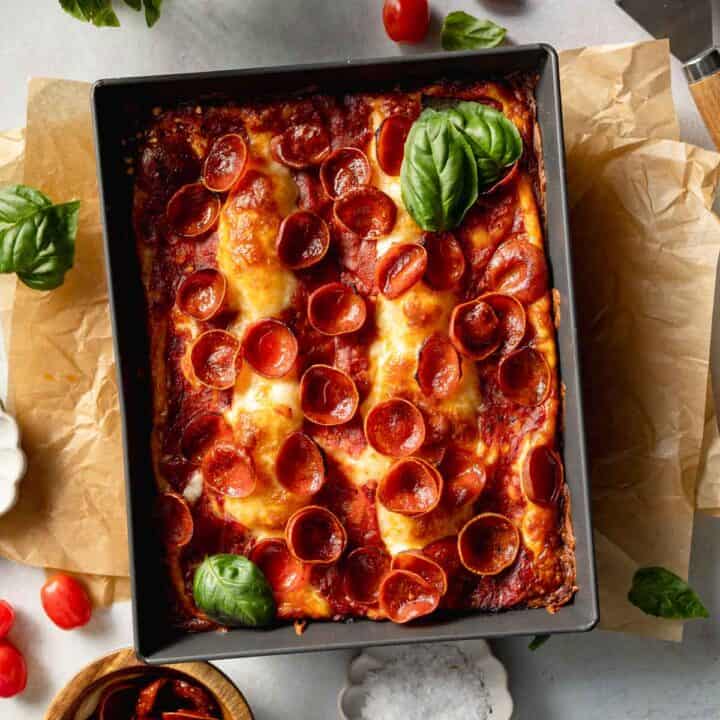
If you love using Caputo Firoeglut as much as I do, be sure to check out even more ways to use it here in this roundup of gluten-free recipes with Caputo Fioreglut, where you'll find even more great recipes like this gluten-free Detroit style pizza and these amazing gluten-free bagels!
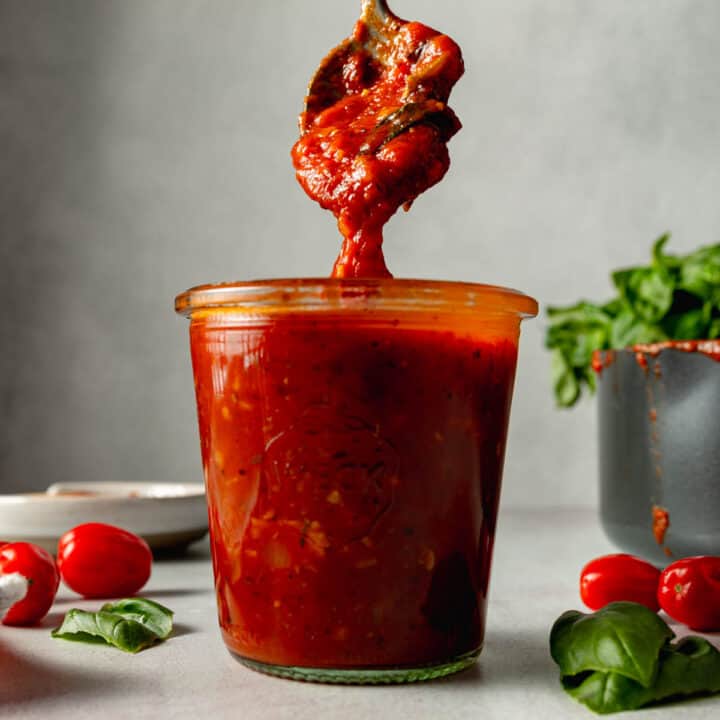

Still Hungry? Subscribe Here!
Recipe

Best Gluten-free Pizza Dough - Caputo Fioreglut
Ingredients
- 4 cups Caputo Fioreglut Gluten-free Flour (spooned and leveled *See note.)
- 1 Tablespoon Kosher Salt
- 2 teaspoons Instant Yeast (Also known as Rapid Rise or Bread Machine Yeast)
- 1 ¾ cups Water (warmed to between 120°F-130°F)
- 2 tablespoons Olive Oil (plus more for brushing)
- Pizza Sauce, Cheese, and desired toppings
Instructions
Making the Dough
- In a stand mixer bowl or other large bowl, whisk together the dry ingredients.
- Pour in the warmed water (120°F-130°F) and olive oil.
- Blend on medium speed for 2 minutes or stir very well with a sturdy spoon.
- Scoop the dough into a ball and drizzle with olive oil. Roll it around to coat the dough and the sides of the bowl with a thin layer of oil.
- Cover the bowl with plastic wrap and then a kitchen towel. Let rise in a warm place for 1 hour or until dough has doubled in size. Use immediately or refrigerate until ready to make pizza. **See note.
Forming & Baking the Pizza
- Preheat the oven for at least 30 min. at 450°F with a baking stone or cast-iron pizza pan in the top ⅓ of the oven. ***See note.
- Place half of the dough on a piece of parchment paper that is no bigger than your pizza stone or pan.
- Sprinkle white rice flour on top and either pat out the dough with your hands or gently roll it out with a rolling pin into a 12-inch circle. (Pat out the dough for a thicker and softer crust edge. Roll out with a rolling pin for a thin and crunchy crust edge.)
- Brush the entire crust with olive oil. Then slide the pizza crust, along with the parchment paper, onto the pizza stone. Bake for 7 minutes, removing the parchment paper after 2-3 minutes.
- Remove the pizza crust from the oven, top with sauce, cheese, and other desired toppings.
- Slide the pizza back into the oven and bake for 7 additional minutes or until desired doneness.
Notes
- * Measuring by weight (grams) is the most accurate and is preferred for this recipe. (To convert to grams, click the "metric" button at the top of the ingredients list.)
- **The dough is easier to work with when cold. Feel free to make the dough ahead and refrigerate for several hours before making pizza.
- ***This pizza can also be cooked in an Ooni Pizza oven and it tastes phenomenal!
- Generally, follow the instructions that came with your Ooni for cooking the pizzas.
- Do not pre-bake the crust first when using the Ooni.
- Divide the dough into 3 or 4 portions instead of 2.
- Roll dough out as thinly as possible on a pizza peel dusted with GF flour and cornmeal. Check while rolling to ensure the dough is not sticking to the peel. If it is sticking, use a bench scraper to lift the edge and sprinkle more cornmeal underneath. Do a "jiggle test" frequently to make sure the dough is not stuck.
- Watch the edges because they tend to burn easily.
Nutrition
* Nutritional information is provided as a courtesy and should be used as an estimate only. See the nutrition policy for more information.
Save This Recipe!
Shop this post
*This post contains affiliate links, through which I may earn a small commission from qualifying purchases at no extra cost to you.
Lisa says
Can this recipe be made in a bread machine with a gluten free option? Prior to going gluten free, I had a recipe very similar to this that I made in a bread machine.
Katie Olesen says
I haven't tried it. I think as long as you check to make sure it's getting fully mixed, it should be fine though. If you try it, would you mind reporting back on how it went?
Martin says
On a trip to Italy this year, my celiac wife had the best GF pizza ever. So good we asked to speak with the chef who said they use deglutenized floor. We had never heard of such a thing so when we returned I began researching and found Caputos. We tried 2 different recipes/methods prior to this one including the one recommended on the Caputo site. They were good but this recipe is the best. It is authentically good pizza dough. However, we prefer the dough slightly thinner so I need to get a rolling pin although I'm worried with how sticky the dough is. Do I add more rice flour to help roll it? Thanks for this delicious recipe!
Katie Olesen says
Yes, I use a combination of cornmeal and brown rice flour under the dough, and brown rice flour on top to help roll the dough out thinly. I check it frequently to make sure it isn't sticking. If it is, lift the edge with a bench scraper and sprinkle more underneath. With some practice, you'll be making them thinly without any sticking.
If you love making this style of pizza at home, I highly recommend looking into an Ooni pizza oven, they are amazing for cooking this style of dough. I have a post on it if here you want to check it out. The recipe is the same, but you can see how well it cooks in the pizza oven.
Chloe says
Comes out perfect on my pre heated cast iron pizza pan. Crisp outside, soft and chewy inside. Gluten free 39 years and Caputo is a total game changer.
Holly says
Loved the crust! I like a very thin crust and this delivered in every area; great bite, lots of good air bubbles and excellent taste. I divided the dough into 4 parts since I wanted very thin crusts and froze the remaining portions.
C. Lynn says
Just not what I was expecting I guess. The crust was dense and hard to bite through (to be fair my husband likes his crusts like this, and maybe that's how it was supposed to be) . Even with a sharp chef knife I struggled to cut through the bottom crust. I think it would benefit from a second rise after shaping the dough, if it would rise again. Not sure if it would be easier to cut through then, but it would at least have more air in it. It also struggled to brown (baked it at least twice as long as stated). I didn't use the rice flour on top to shape it. If it was just to keep the dough from sticking to you, I didn't need it, it was oily, not sticky at all. But I wasn't sure if maybe that's what helps it brown? Anyway, I wasn't happy with mine, sorry.
Katie Olesen says
Thank you for giving the recipe a try and sharing your feedback. Fioreglut is more starch-heavy, so it doesn’t always brown as much. Brushing the crust with olive oil before baking can help with both browning and crispness. A second rise won’t add airiness, but baking on a preheated pizza stone or steel can give the dough a quick blast of heat for better oven spring and nice air pockets. After shaping, letting the dough rest about 15 minutes can also help. The rice flour is only for dusting during shaping, so it doesn't stick to your hands or rolling pin. I really appreciate you taking the time to share your experience.
Karla says
Delicious! I also had to bake mine a bit longer to achieve a firmer result. Thanks for the recipe.
Brianna says
I’ve made this twice now and it is phenomenal. Probably the best gluten free pizza I’ve had. I did cook it a little longer (5 mins on parchment, 5 mins off, 13 mins after toppings), but that’s because my oven seems to take longer on everything. I also added a little sugar (2 teaspoons) to the dough for a hint of sweetness. Perfection. Crunchy outside, airy inside. Thank you for this recipe! It’s so nice to have good pizza again!
Lucy Fritts says
This was so delicious! We ate at a restaurant on vacation who used this flour for pizza. I ordered it online but didn’t want to make 6 crusts as the recipe on the bag suggested. I found your recipe and it was fabulous! Thin enough but with a nicely raised lightly chewy texture. Most importantly the crust cooked through with no doughy spots without being overdone. Do you ever freeze premade GF dough? With GF items I’m always concerned the texture will change on yeasted items.
Katie Olesen says
Hi Lucy, so glad you enjoyed the recipe! That was how I first discovered this flour as well! I don't typically freeze the premade crusts, but that's not saying it can't be done. I did try freezing pre-made dough. The lift wasn't quite what I wanted, so I decided it's worth just making it as needed. The dough is fine refrigerated overnight if needed.
Chelle says
It freezes and reheats well in the microwave after it's cooked ime. ☺️
Suzannah says
This is a pretty good recipe, I think. It's easy and can be made well ahead, which is nice. I will make it again and freeze some of it so I always have pizza possibilities. Two main things I found:
1. Use all of the salt. It seems like a lot, but it's necessary.
2. Roll it thinner than you think. I think this could be more like three or four 12" pizzas; crust on the first one was way too thick and more like bread than pizza.
J Kazi says
I don’t understand the instructions. The directions say decide the dough in 2 or 4. Why would I do that. Is there enough dough for more than one pizza? Also, do you warm the pizza stone in a hot oven before putting the dough on?
Jan k
Katie Olesen says
This recipe makes enough for 2 (12 inch) pizzas. The notes suggest dividing the recipe even further if you're baking it in an outdoor pizza oven because the crust needs to be very thin for that. As stated in the instructions, preheat the oven for at least 30 minutes with a baking stone in the top third of the oven.
Chloe says
Perfect every time. I do it on a preheated cast iron pizza stone. I freeze the dough for the second crust for another time.
Barbara Tyszka says
I've made this multiple times and it's soooooooo good!!!! My daughter, who is picky about her GF pizza crust, likes it too 🙂 Best pizza crust EVER and so easy to make! Thank you!
Joe says
I made it on a pizza oven and it turned out perfect! Rose like a cloud and made some great pizza!!!!
Katie Olesen says
Glad you enjoyed it, Joe! It really is the best in the pizza oven!
Laurie says
Amazing Pizza! We've made it a couple of times and it's always great! What an amazing gluten free pizza!
Christopher says
I can’t wait to try this tomorrow. I am very picky about pizza crust and gave up trying with other gf flours after many attempts. I plan on building a pizza oven next year and, if this crust works out, will be even more excited about the project. Who knows, it may even inspire me to build it sooner.
Katie Olesen says
I hope you love it! Make sure to check out my pizza oven post! https://wheatbythewayside.com/ooni-gluten-free-pizza-dough-caputo-fioreglut/
Linda says
Can you freeze the pre-baked pizza crust to use later? If do, how long will it keep in the freezer and what is the best way to freeze it. I am excited to try this for my GF children (celiac). Thank you!
Katie Olesen says
I personally haven't frozen the pre-baked crusts. I would be sure to poke some holes before baking so it doesn't puff up too much. I think if you tightly wrapped in plastic wrap then foil, it should last a few months at least in the freezer.